


This week, I’ve been re-reading the book ‘Curation’ by Michael Bhaskar. In it he describes the power and prevalence of the ‘curator’ in the world of excess that we inhabit. We live in a world of abundance - wherever we look, there is more produced that we could ever countenance. In this post-scarcity society, the role of the ‘curator’ as a filter has come to dominate.
Bhaskhar mentions the transition that has taken place from scarcity to abundance and documents how widespread it is: all industries are affected by this, none more so than the arts.
Music is certainly no different, with 100,000s of songs released every day, there is simply no time to listen to them all. And now with AI music, the market is even more flooded.
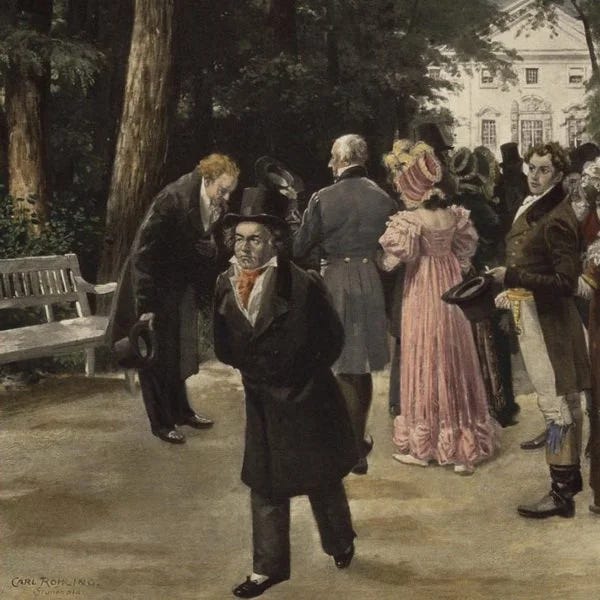
It wasn’t always like this - Bhaskhar tells the tale of when Beethoven encounter Goethe in ‘The Incident of Teplitz’ around 1812. The two creative titans of the time were very different characters: Goethe was an institutionalised and urbane, Beethoven a wild and maverick thinker.
During their walk together they happened upon some royalty and members of the Austrian imperial court. Goethe’s approach was to move aside, to bow and pay respect - know thy betters.
Beethoven was the opposite, he didn’t see why he must cow to anyone else: he was an artist, a creator and no one with a title and status should be deemed better than him. They should, on the contrary, pay their respect to him!
“Kings and princes can indeed create professors and privy councillors, and bedeck them with titles and orders; but they cannot make great men—spirits that rise above the world's rubbish—these they must not attempt to create; and therefore must these be held in honour.” Beethoven
This story provides an interesting insight into what has become the norm for our society ever since: that Beethoven embodied the emerging Romantic idea that artists were not servants of princes but independent creators whose genius outranked inherited nobility; that creativity has the potential to be the pinnacle of human endeavour and flourishing.
No longer could royals and other aristocrats rely on their lineage or status to be treated as Gods amongst men. Beethoven represented a culture shift that has largely stayed in place ever since.
Before Beethoven, music and the arts had been subservient to institutions such as the church. Whereas his predecessors such as Bach and Mozart wrote their music for the church or their grand patrons, Beethoven wrote his music for himself: a new conception of value and purpose.
“Only Art and Science can raise men to the level of gods” he said.
This set society on a path to hold creativity in highest regard and was widespread, from free marketers such as Adam Smith and entrepreneurs such as Steve Jobs across all areas of the arts and beyond.
Can we all be gods?
With the proliferation of tools that give our creative output a platform i.e. social media and the internet, and technical tools that allow us to endlessly create i.e. any music production software that has every instrument, sample and drum loop available at the click of a button we are overwhelmed by options to create . Creativity is everywhere and it is impossible for us to consume all at once.
So, as a result, there are new gods in town. These are the influencers, the curators who provide a crucial filter to tell us what we should focus on.
As I strive to export my creative outputs in the form of my music to a audience that grants me a sustainable future, I’ve realised that one has to identify and find ways to work with these new gods.
This is obviously not entirely new: the traditional way of doing this was to hire a PR firm and get them to get a new release featured in a magazine or online publication. However, the power and reach of these publications is on the wane. In my experience, getting a review no longer seems to have a huge amount of impact when it comes to selling records. Or at least, it’s not so immediate.
Instead, the new gatekeepers of my world are the likes of Luke Una, Josh Mason aka Somewhere Soul, Colleen Cosmo Murphy’s Balearic Breakfast. These individuals carry just as much weight as publications or institutions such as BBC 6 Music, and although the likes of Gilles Peterson and Jamz Supernova are still vastly influential - I would say even they don’t have the same direct or immediate impact on record sales (maybe they do on streaming/social numbers though).
Case in point:
I’ve written about the huge impact that that Luke Una has had on my career in recent years. When he proclaimed Green City as his ‘Track Of The Year’ in 2024 and featured it in one of his instagram videos, sales more than doubled . It went from a small pressing of 300, to eventually selling over 1200 records.
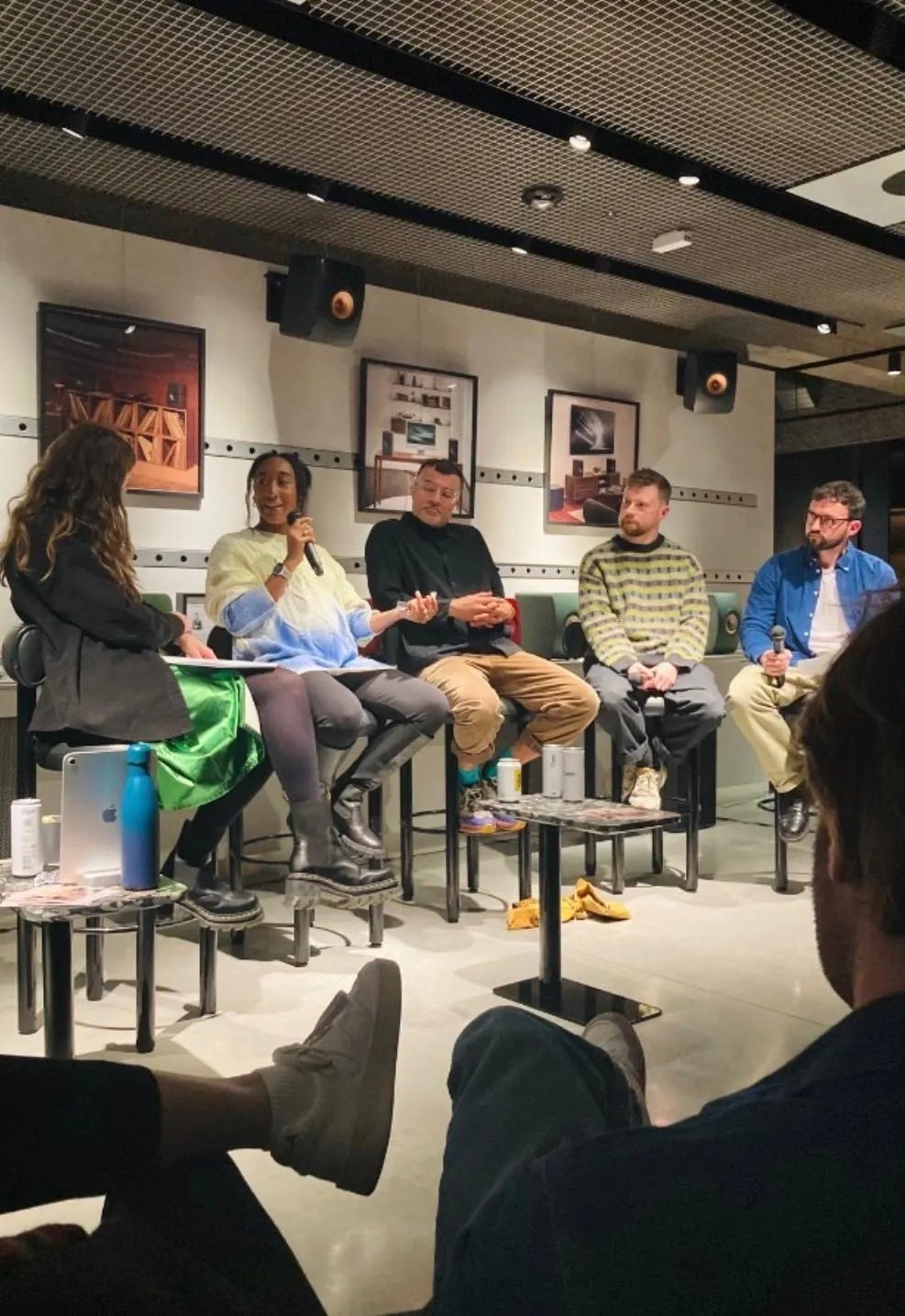
I met Josh Mason aka Somewhere Soul when we both spoke on a panel last year on the topic of ‘AI versus Human Curation’. I’d only heard of the Somewhere Soul page channel in passing but it was fascinating to hear his insight of how a single post from him bigging up a song has led to labels reporting an uplift of 1000s more record sales. He now has a following of close to 1 million people.
I spoke to Josh after and luckily he seemed to be a fan of my music. I got his address and sent him the new Havana Sessions record as soon as it was released. A couple of days ago, he did a post featuring ten of his tracks for the summer and Havana City was on there - number five in his ten images.
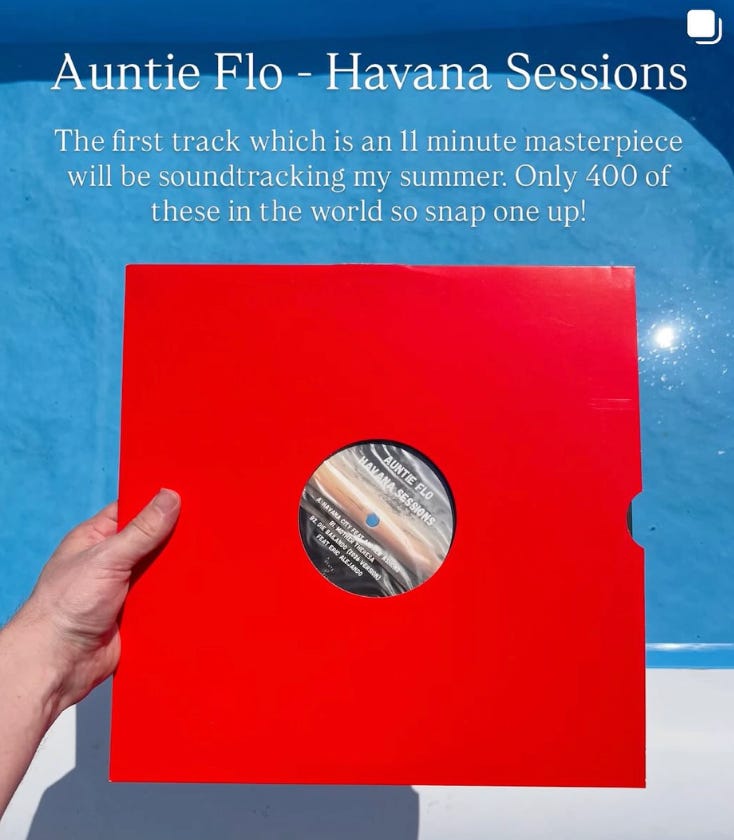
The response was immediate, sales started dropping in. In a 24 hour period I sold over 50 records on Bandcamp - and that number is still rising. I double down with a post of my own that then saw the likes of Luke Una bigging it up too in a comment - double win!
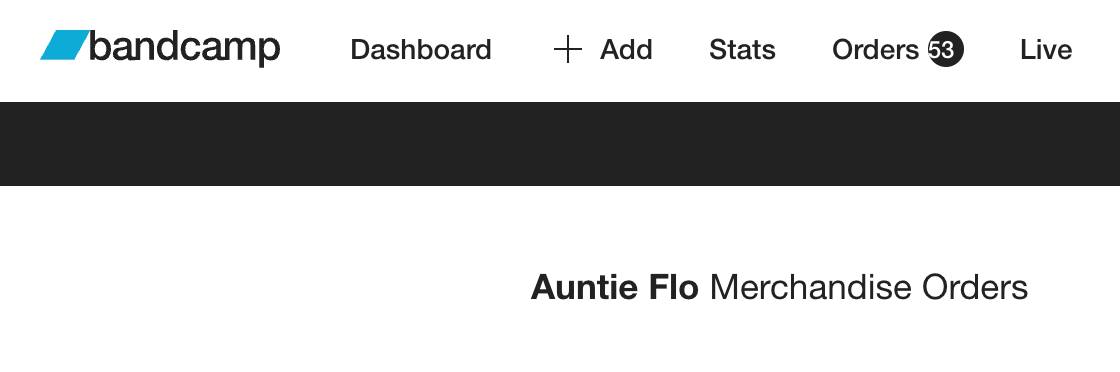
To put this in context, I’d sold 50 or so in total in the first 3 weeks of release on Bandcamp and another 50 during our UK tour. 200 have been sent to the record stores for release in 4th June and now I only have 50 left.
Buy one here:
So Josh helped sell a quarter of the records I had listed on Bandcamp due to one post in which my track was nestled as the fifth image in amongst ten others. Wow.
In this world of excess, Somewhere Soul, Luke and others are crucial tastemakers - the yield an inordinate amount of power in an era when the market is flooded and traditional media holds far less influence than before.
So when they do mention you - happy days! I can’t imagine how much music they get sent though, so who will be the filter for the filter?
Long live the new Gods!
Super interesting, thanks Brian. From my experience there is a similar impact from being featured within the Bandcamp radio or on their ‘new and notable’