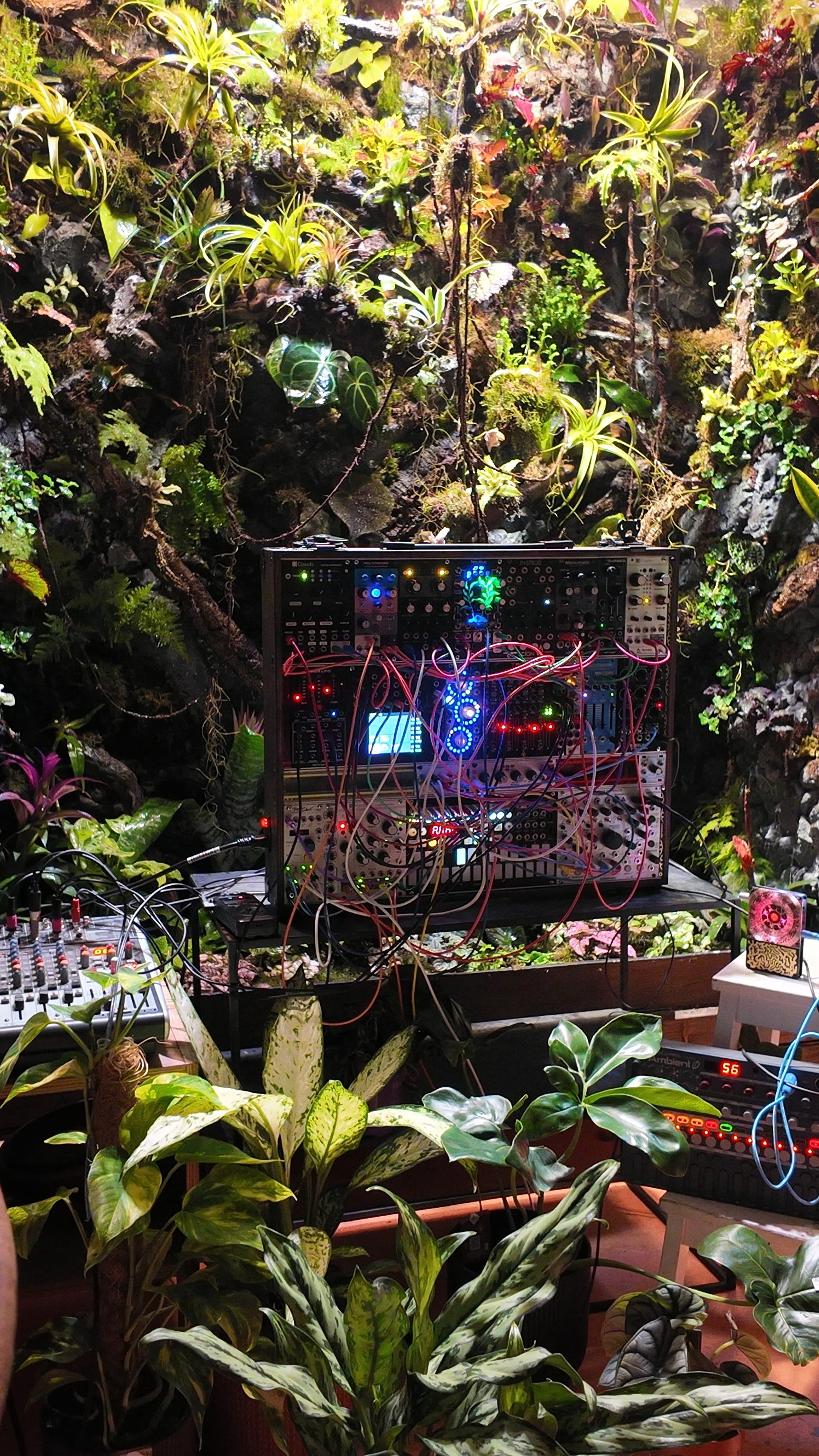
Plants Can Dance, a compilation album bringing together some of the leading practitioners in what can perhaps be called a new genre of ‘plant/fungi-inspired music’ will be released on 26th June.

Curated by British sound artist, Brian d’Souza aka Auntie Flo, it features songs by Tarun Nayar aka Modern Biology, OMMA (co-founder of Playtronica), British sound artists Jason Singh, Justin Wiggan and Dr Helen Anahita Wilson and more.
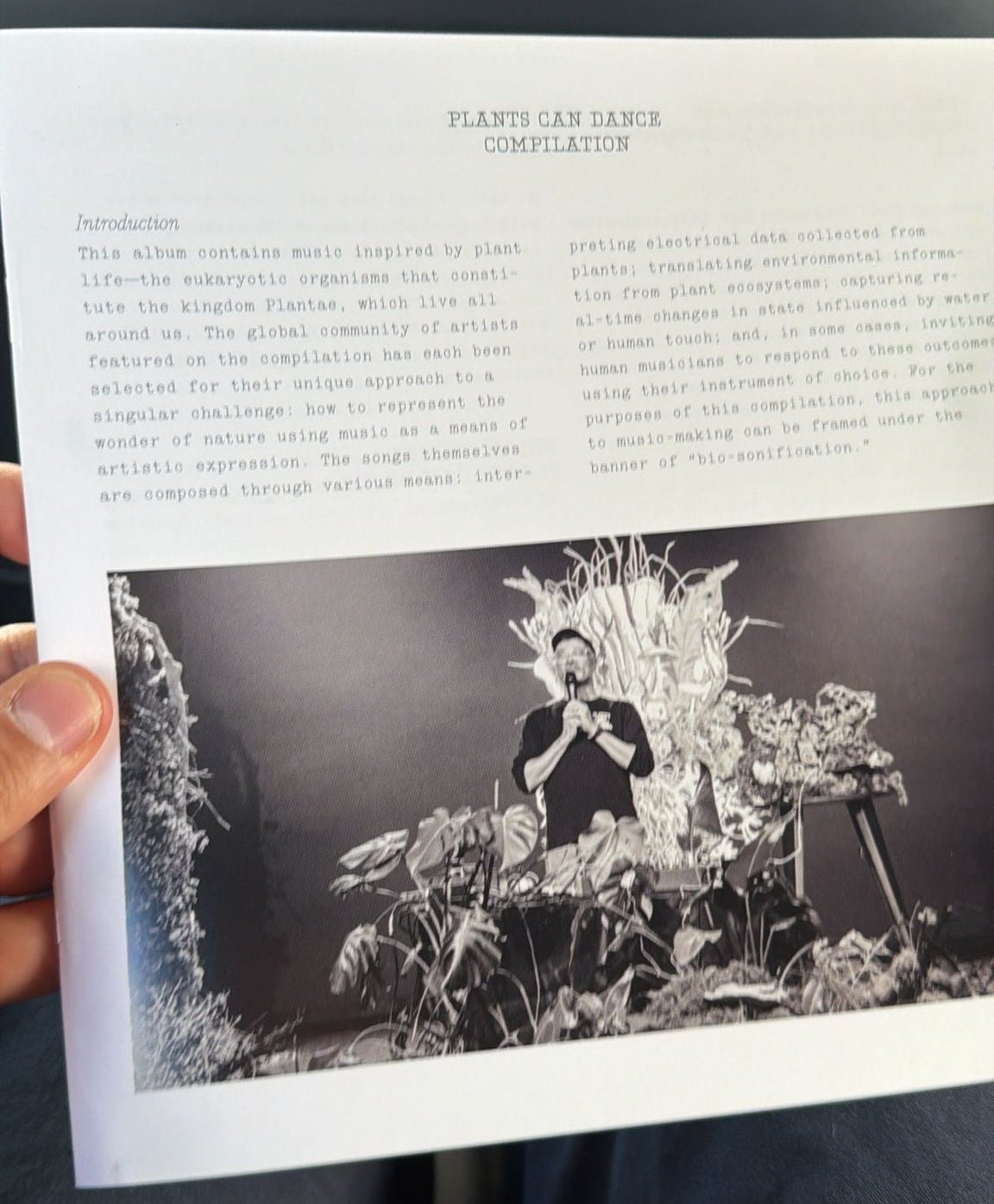
There are many different approaches to creating music inspired-by plants - ‘biosonification’ - and this ground-breaking, first-of-its-kind album brings these together into one body of work for the first time.
The physical release also includes a 7500 word, 28-page magazine, which goes into detail on these approaches, discussion and reflections on the nature/music connection.
To pre-order a copy of the vinyl and ‘zine, visit our shop or click HERE for streaming links:
This week, we released the second single - ‘Growing Roots’ by Modern Biology & Zekarias Musele Thompson.
Meeting the global superstar of plant music
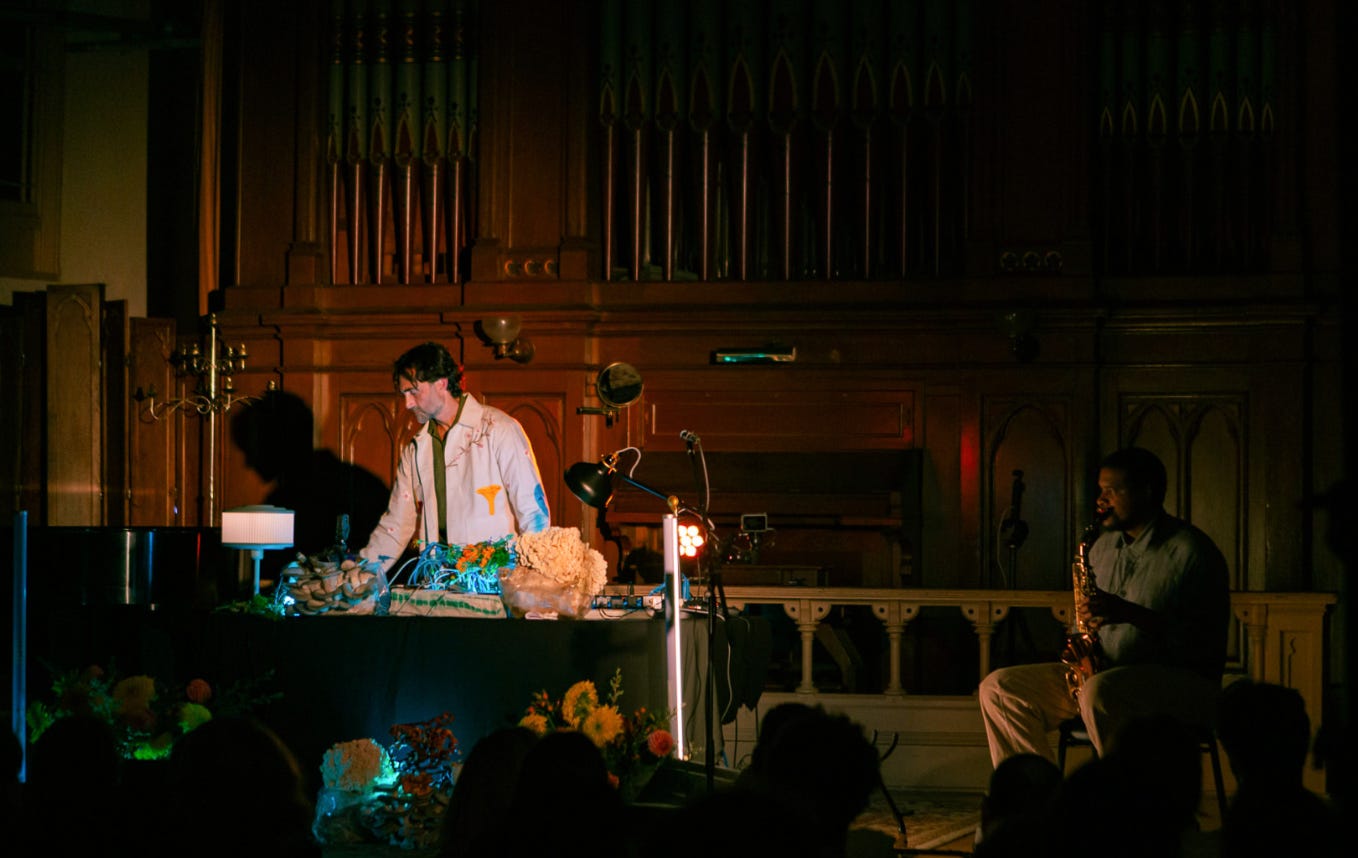
Tarun Nayar aka Modern Biology is the superstar of plant (and mushroom) music, with viral videos and hundred of thousands of followers across social media.
He’s a pioneer in the field, bringing his Mushroom Church events to parks around the globe and developing the new Pocket SCÍON device in partnership with Instruō synths.
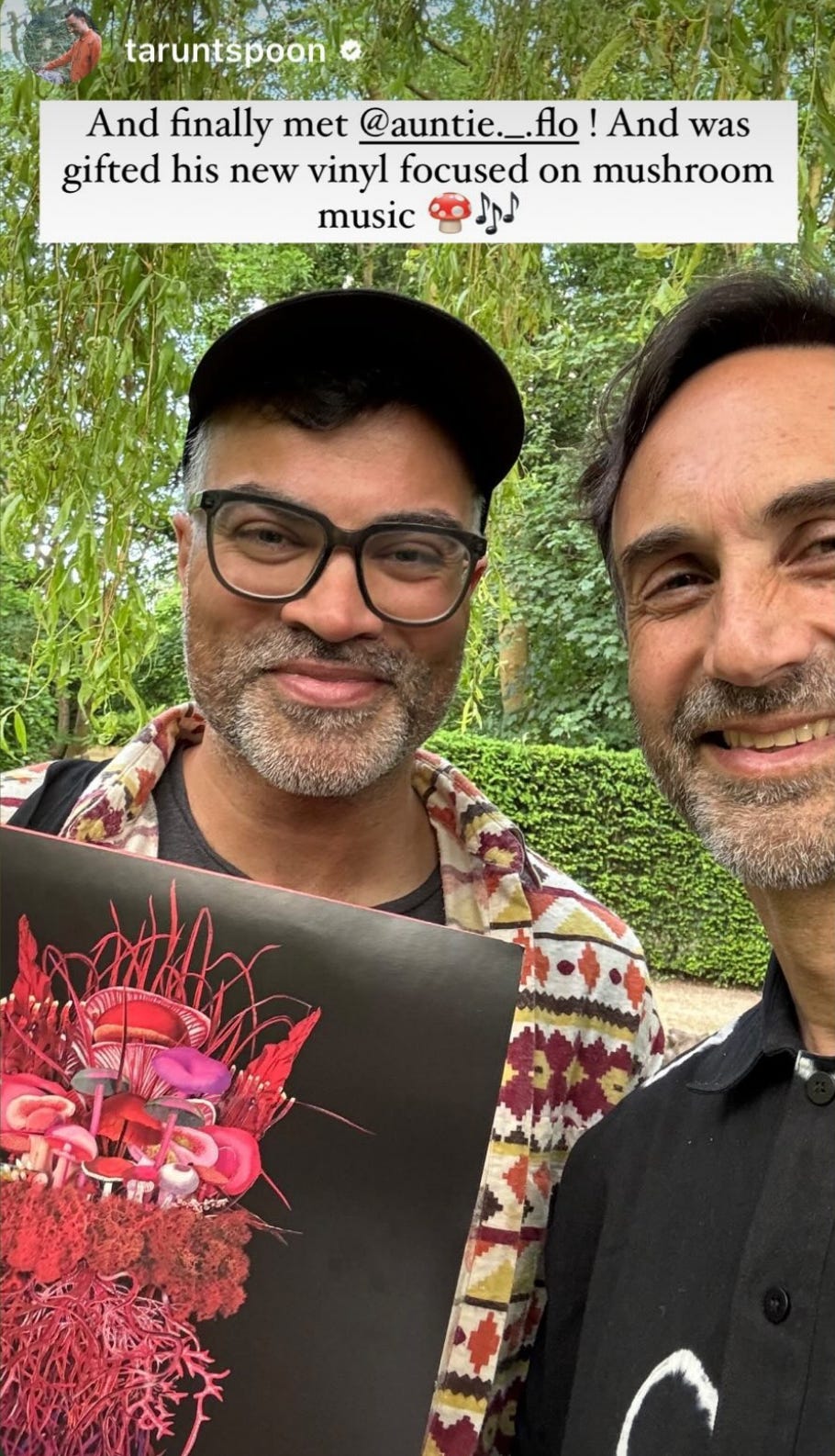
Tarun and I share a similar journey into the world of plant and mushroom music, and have both been working in the field for a number of years. We finally crossed paths during the promotional campaign for our Mushroom Music event in London in 2023, which served as the launch of Mycorrhizal Fungi EP, the first release on A State Of Flo records. It was an honour when he agreed to be part of the Plants Can Dance compilation.
His work is all about accessibility - using his music to unlock a sense of wonder and play within his audiences. Originally a biologist before turning to music, he is still very interested in the underlying science and recently ran an experiment which tested whether the Pocket SCÍON could pick up various interactions with a pothos plant and represent them with its sound output. The signs are very promising… and we’ll share more on the results as they become clear.
We caught up at the recent MOTH Festival of Ideas in London where he told me about the experiment and how the collaboration came together for Growing Roots:
For the Plants Can Dance Magazine, Tarun penned an article giving his insight into the experiment. We’ve included it below but would encourage you to support the album for the full context.
Happy Listening
Brian d’Souza - Curator of Plants Can Dance
Earth Month Experiment by Tarun Nayar
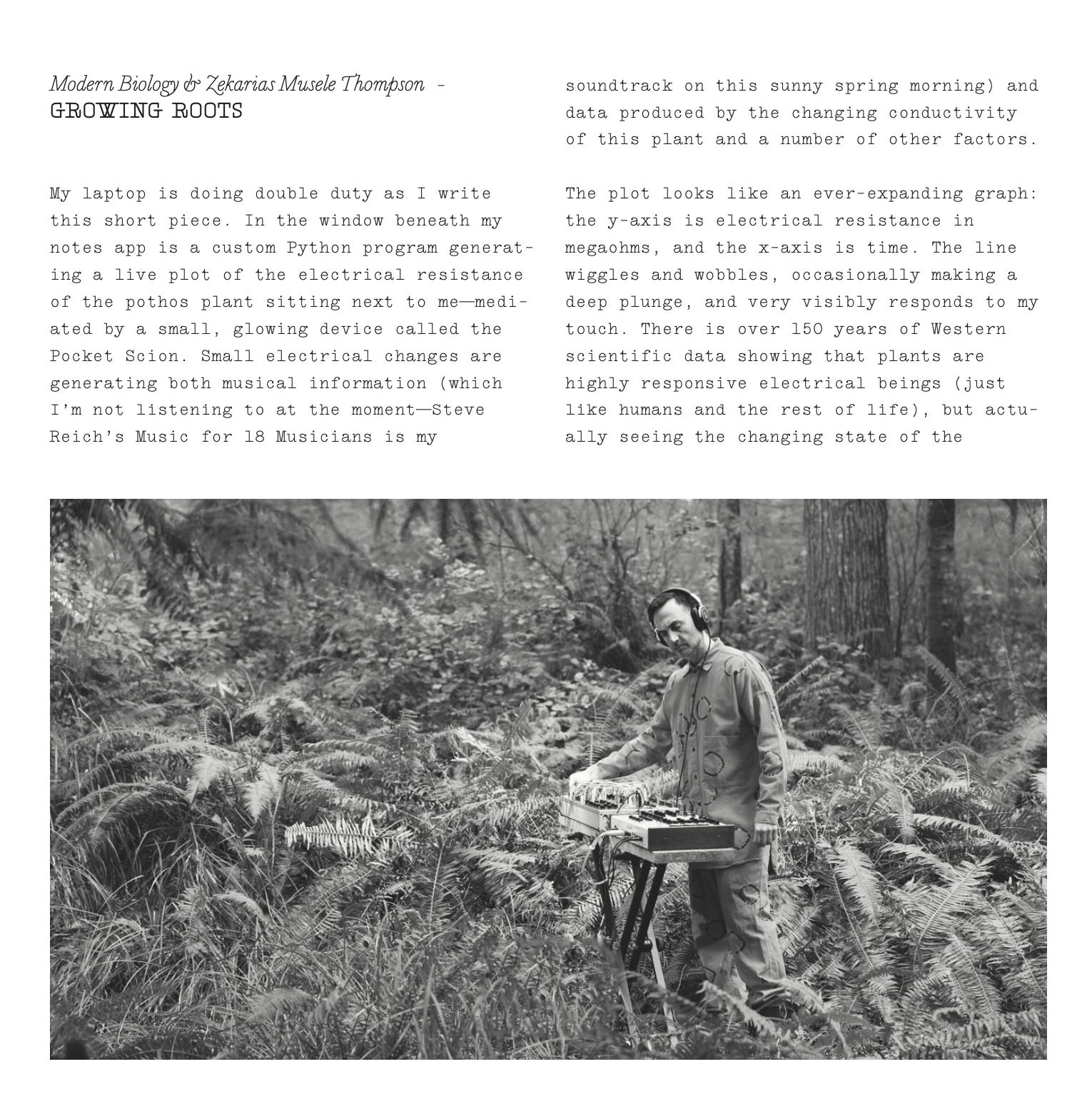
My laptop is doing double duty as I write this short piece. In the window beneath my notes app is a custom Python program generating a live plot of the electrical resistance of the pothos plant sitting next to me—mediated by a small, glowing device called the Pocket Scion. Small electrical changes are generating both musical information (which I’m not listening to at the moment—Steve Reich’s Music for 18 Musicians is my soundtrack on this sunny spring morning) and data produced by the changing conductivity of this plant and a number of other factors.
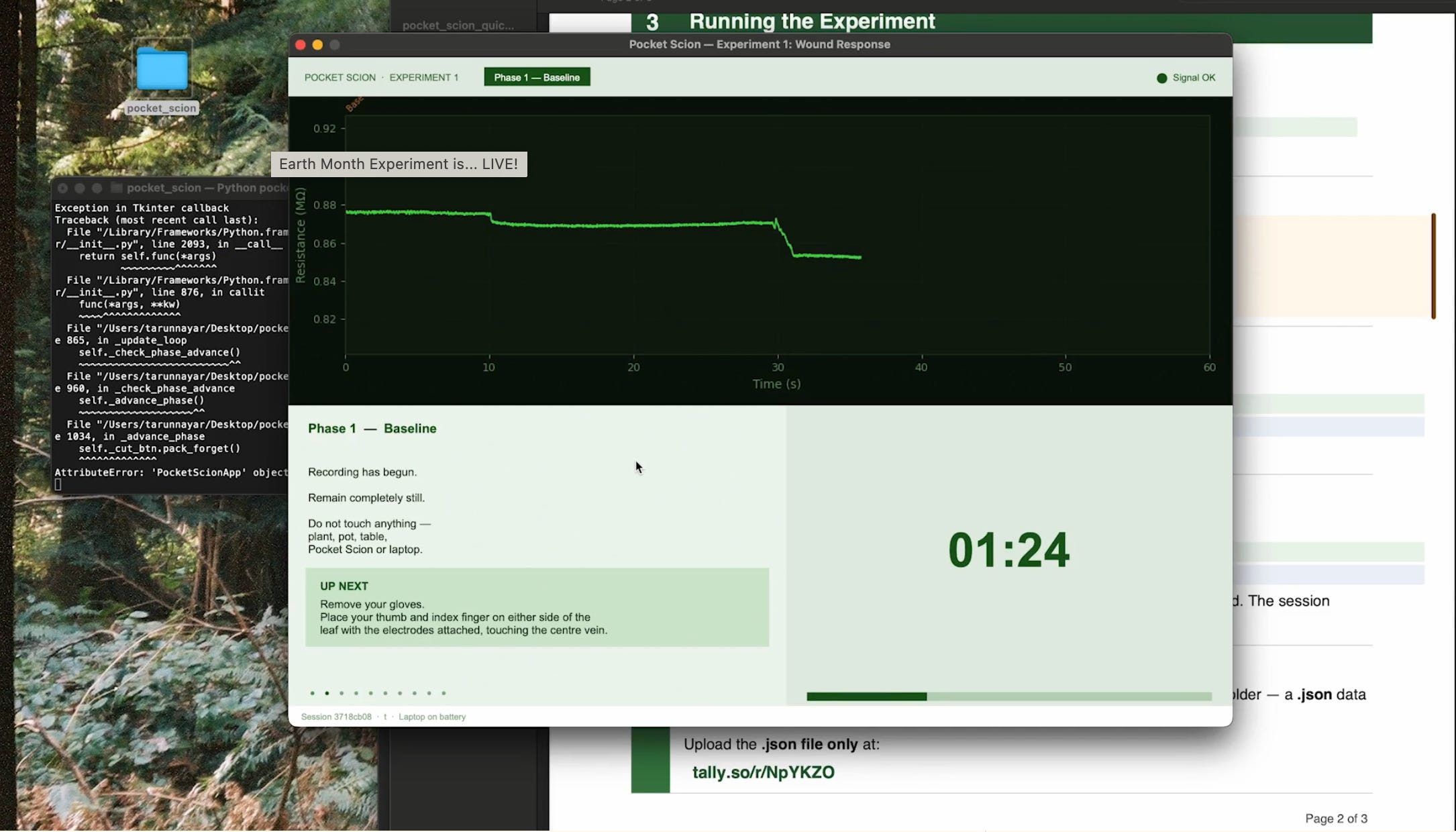
The plot looks like an ever-expanding graph: the y-axis is electrical resistance in megaohms, and the x-axis is time. The line wiggles and wobbles, occasionally making a deep plunge, and very visibly responds to my touch. There is over 150 years of Western scientific data showing that plants are highly responsive electrical beings (just like humans and the rest of life), but actually seeing the changing state of the plant’s electrome is fascinating. I find I can go about most of my day forgetting that plants, mushrooms—this whole living system—is alive. And that this living system has been alive for four billion years (!). Despite cataclysmic climate events, mass extinctions, meteors (and now humans), we’re still here. In perhaps the best example of resilience, courage, and hope, life simply doesn’t give up.
Biochemist and professor Nick Lane posits that proton gradients—electrochemical charge differences across thin mineral barriers—were the engine that produced life, before DNA and before RNA. Around four billion years ago, protocells forming in the porous mineral walls of deep-sea hydrothermal vents developed electrochemical gradients across thin inorganic barriers. These gradients allowed work: they powered chemical reactions that built organic molecules, including the Krebs cycle intermediates that form the building blocks of life. The harnessing of these proton gradients to make ATP is as universally conserved across all life as the genetic code itself. Every living thing on Earth, from a bacterium to this sword fern, maintains an electrical gradient across its membranes. Author Sally Adee puts it succinctly in her book We Are Electric: electricity may be the most ancient thing about life itself.
This simple act of watching and listening to these electrical changes has had a profound effect on my life. You could say it’s been all-consuming. I work with my good friends at Instruō Synthesizers to make machines, I tour as a “plant and mushroom music” artist, and I build installations for galleries and museums. I think about this practice night and day. Why? I think it’s because it reconnects me to wonder. I feel like a child in nature again—exploring, asking questions, making discoveries, and asking new questions. It also connects me to the more-than-human world, an ancient relationship that Indigenous knowledge traditions have cultivated since humans have been human.
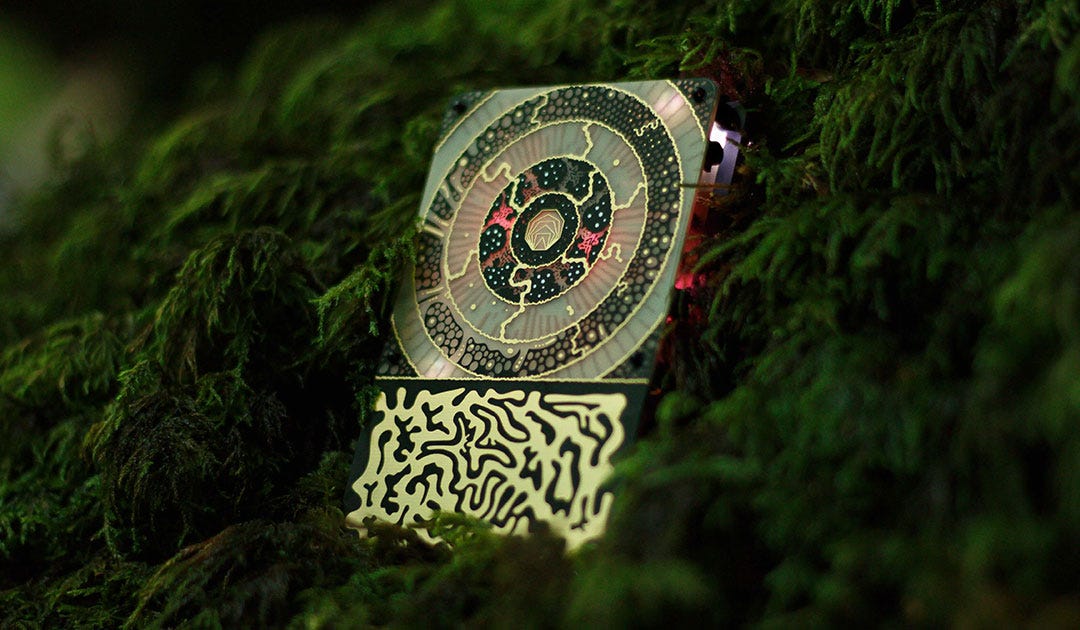
“Plant music” has existed since the late 1970s, shortly after the publication of The Secret Life of Plants. What I’m most excited about now is that much of the “woo” around this practice has been left behind. There’s no longer a need to fetishise or exoticise the practice of making music with the living environment—most people are now familiar with the idea. Devices like the Pocket Scion are affordable enough to be widely accessible (and open-source DIY approaches are readily available online thanks to people like Sam Cusumano). These tools allow access to the raw data—not just post-algorithm musical notes and rhythms. Using readily available tools, literally anyone can generate a hypothesis, design an experiment, and test it.
What do these signals mean? Are they biological? Pure physics? Just noise? What’s the most appropriate way to turn them into sound? What ethical considerations should we keep in mind? These are now easily testable questions. On April 15th, 2026, for Earth Month, we’ll be exploring some of them together. Using a simple protocol and easy-to-run Python code, we’ll be asking Pocket Scion users around the world to spend 15 minutes connected to their own pothos plant. We’ll test a simple hypothesis: that Epipremnum aureum produces a detectable electrical resistance shift following physical manipulation. We’re using experimental protocols derived from the scientific literature, but testing with our small $150 device rather than lab equipment worth many multiples of that. I have no idea what we’ll find. But looking, exploring, wondering, and connecting with community is the whole point. This initiative costs nothing beyond a little time.
I can’t wait to see what the broader community does with these tools. The idea of community citizen science–art projects was one of the driving forces behind this device—and others like it. In these charged times, these simple, nature-based community projects can reconnect us with the resilience, courage, and hope of the living world.
Tarun Nayar aka Modern Biology, May 2026
Plants Can Dance Album Launch Party - London 28th June
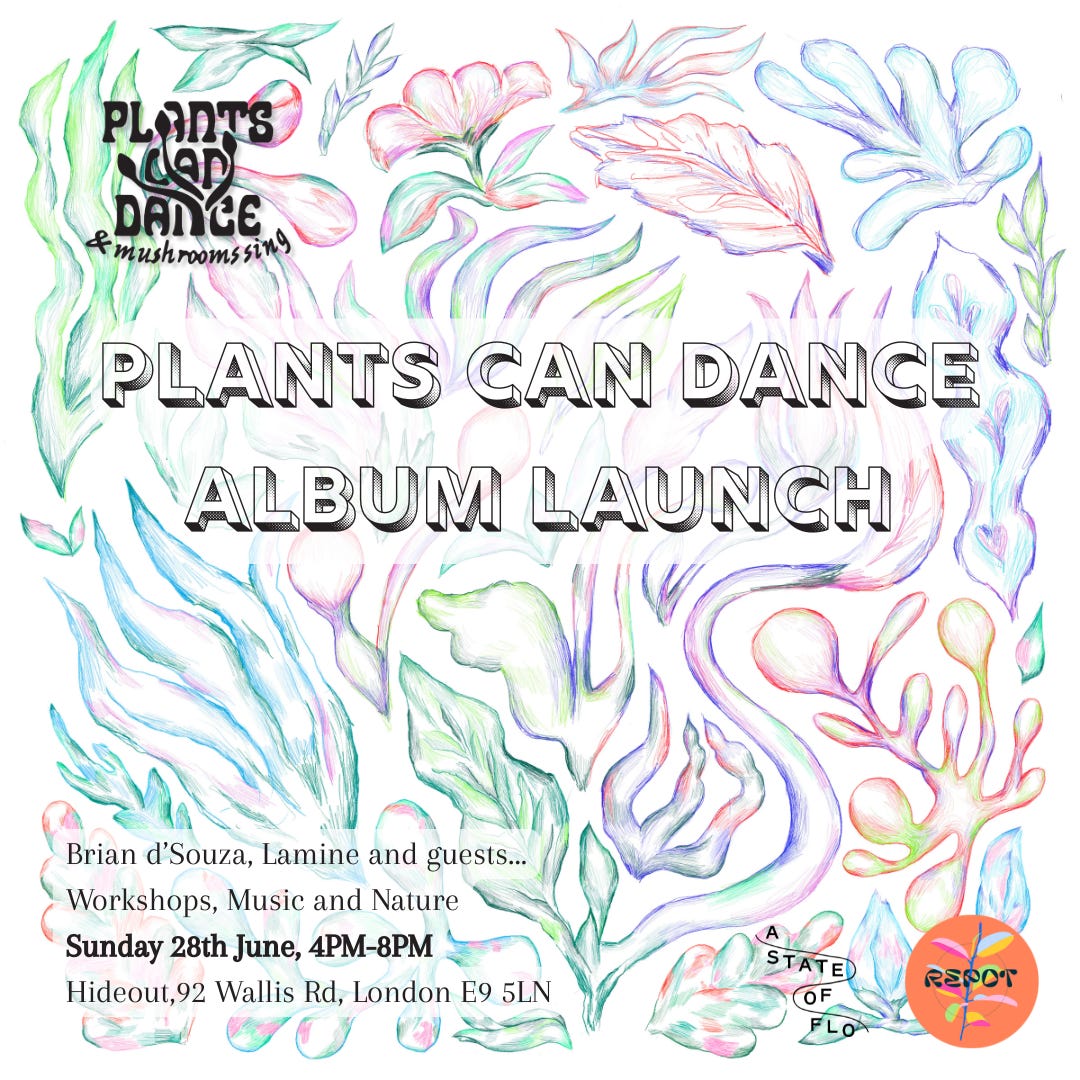
For those in London, please join us for Plants Can Dance album launch party in East London.
We’ll be unveiling the ‘Living Ecosystem’ by Lamine for the first time. An installation he’s been working on for the past year. It is truly something to behold!
We’ll have guest speakers from EarthPercent, Glitch and a DJ set from Mari Kimura (Gondwana Records).