


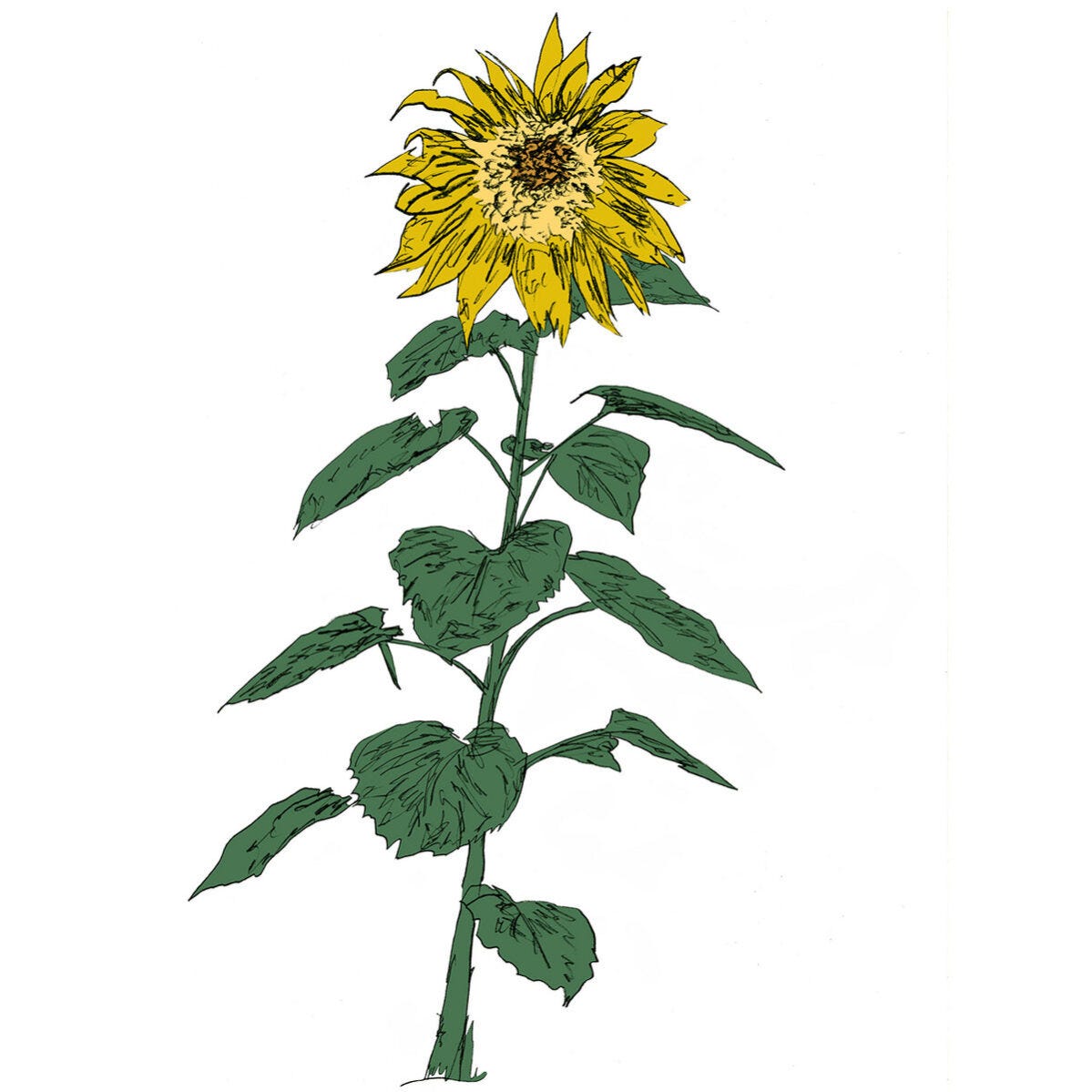
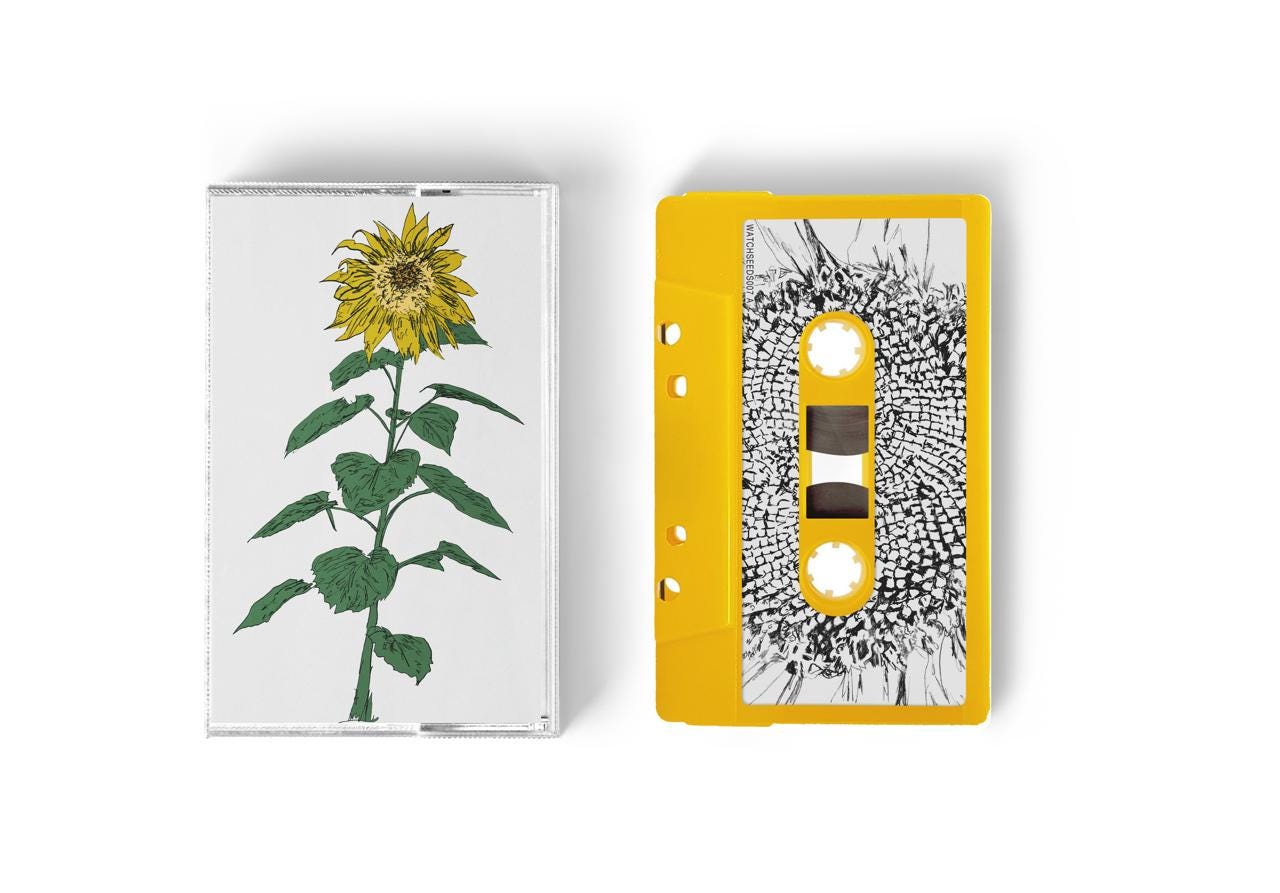
My latest exploration into biosonification is a new album entitled ‘Sunflowers’. It will be released next week on the fantastic label Music To Watch Seeds Grow By on tape cassette and digital download. We collaborated last year on one of my Plants Can Dance events and they asked me to contribute to their 2026 series of tape albums, with my Sunflowers album kicking things off.
BUY the limited run of beautiful cassette tapes- you even get a bonus pack of seeds!
An obvious direction for me to take was to record some of my bioelectrical musical experiments, using realtime electrical data of plants and mushrooms as a means of music composition. A State of Flo is all about seeking connections to the natural world through music, and Plants Can Dance has been exploring a variety of means of doing this over the past few years.
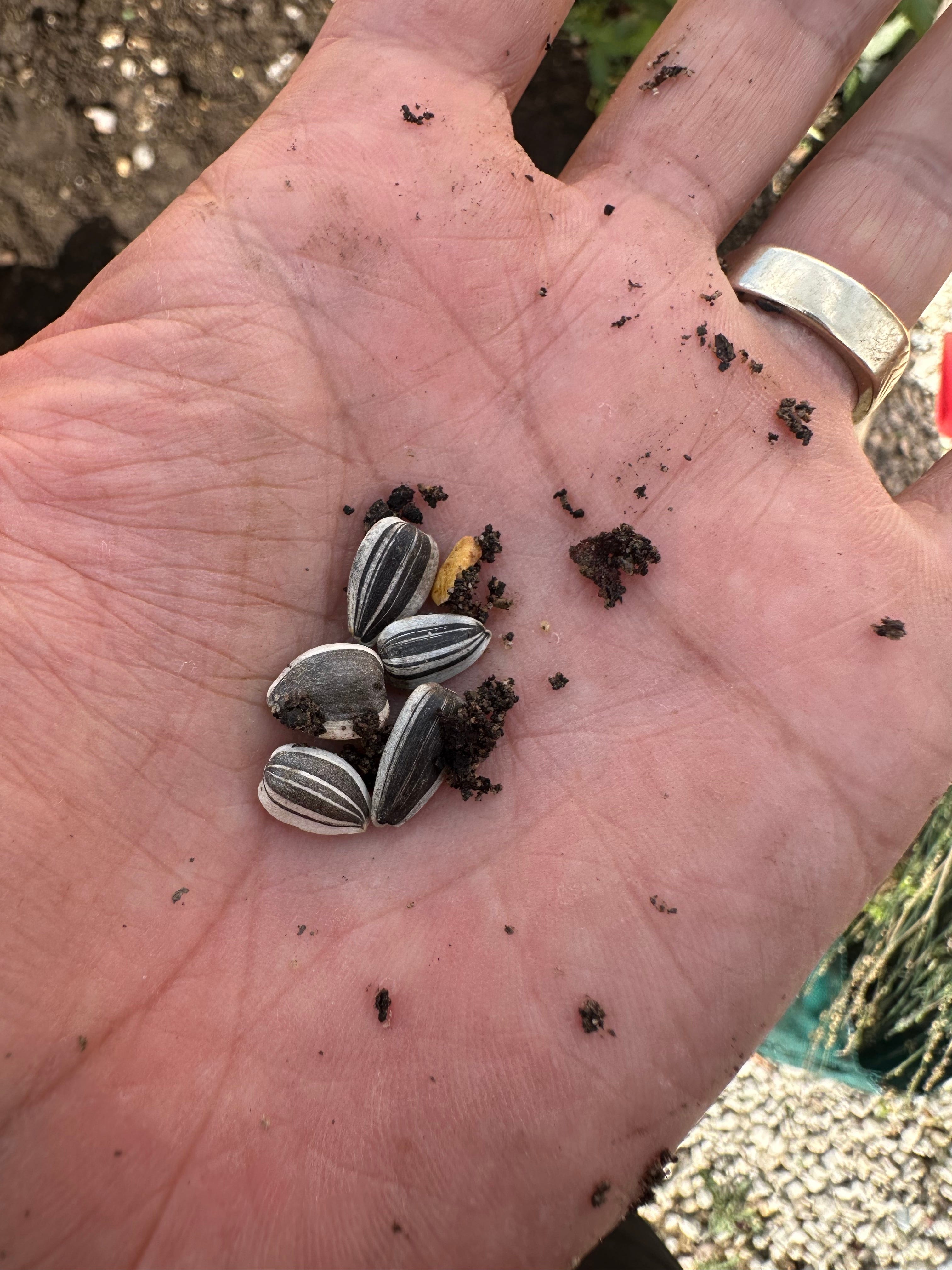
For Sunflowers, my son was gifted some seeds at his school and was excited to plant them and then see them birth a stem and then flower last summer.
He took the plant pot home and we started to experiment with connecting it to firstly the PlantWave to hear if it made sounds.
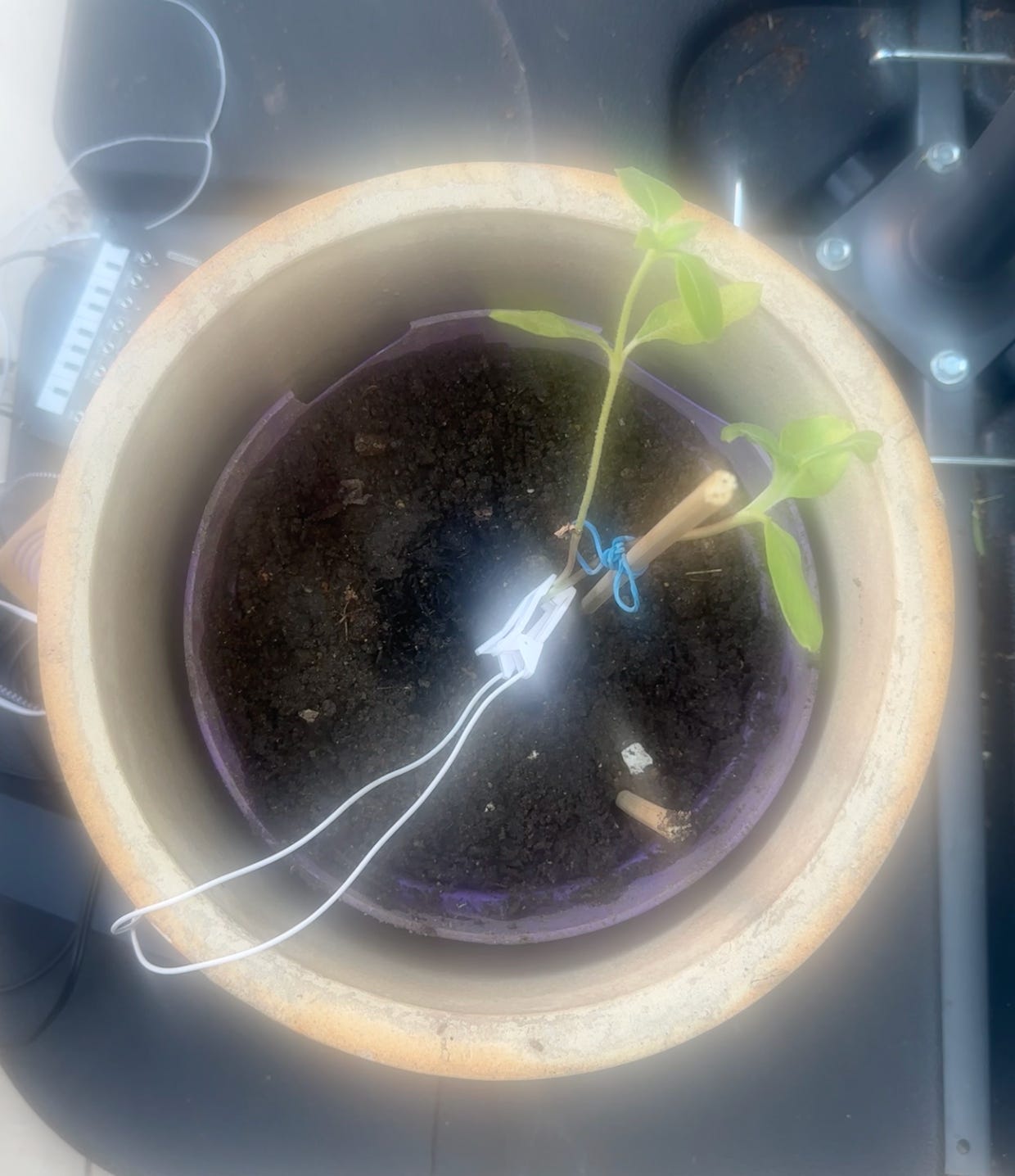
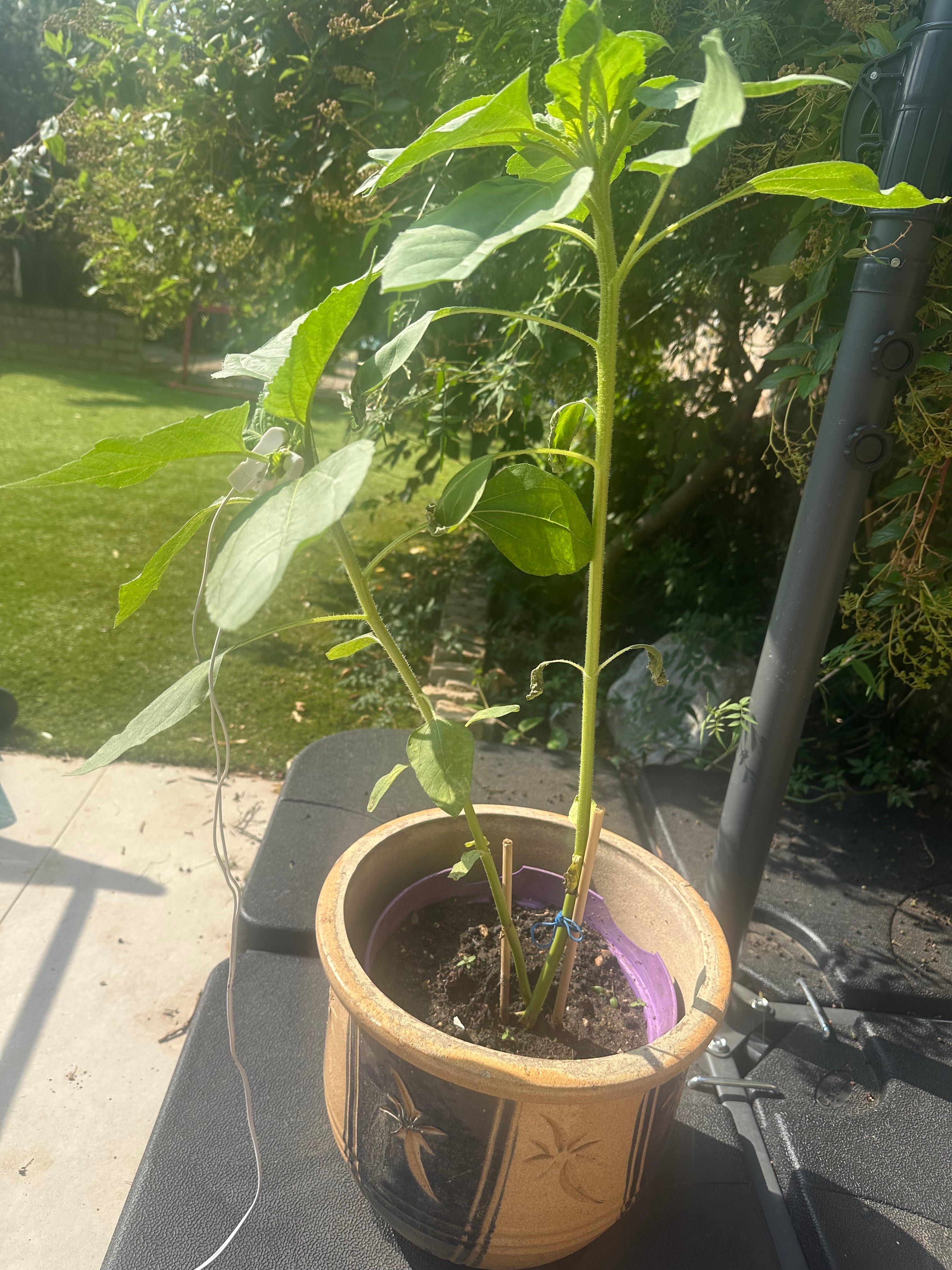
It was fun to watch the sunflower grow over a period of a few months, hearing the different ‘music’ via the PlantWave app everytime we ‘plugged’ it in.
Biosonification - How does it work?
At this point, it’s important to explain that the devices I use such as the PlantWave or the Scion (from Instruo) are outputting a stream of data from mostly the water content within the plant. They work using similar principles to the Galvanic Skin Response, which is the physiological effect that the lie detector is based on. It measures increases in sweat molecules if someone is lying.
These devices measure surface conductivity and have each company has devised a formula that maps the fluctuations of electrical voltage changes onto a MIDI map of musical notes i.e. keys on the keyboard. In this way, we able to simply ‘sonify’ the data that is collected in realtime.
If the plant is well watered, more data is produced and you hear a a greater volume and variety of notes being played. The video shows the impact of watering and lead to the creation of the ‘Irragatio’ track on the album.
One common confusion that may need some clarification is the difference between picking up the electrical data from surface conductivity as I’ve explained above versus the electrical signalling that plants do to interact with their environment as a means of interspecies communication. This, as I’ve discovered over the past few years, is the source of some controversy, as opens up the idea of varying levels of plant intelligence.
Do plants, through their signalling (known as ‘action potentials’) have sentience, which allows them to communicate to other flora and fauna in their ecosystem using their electrical output? This is the source of debate in the botany world, and if you are interested in delving deeper I’d highly recommend The Light Eaters by Zoe Schlanger to learn more. She has a great chapter on another means of plant communication through chemical signalling, which has some similarities to electrical signalling above.
What I’m doing here, and what devices such as PlantWave, Scion, Playtronica have made accessible to all, is not necessarily this. These devices are a fantastic way to enter into a world of biosonification, and artistically I’ve found them to be a freeing way of connecting with the natural world to make music inspired by plants and fungi.
As I’ve witnessed first hand, using music as a medium to ‘listen’ to something natural presents a paradigm shift - allowing audiences to potentially reframe their understanding of the living world - with plants and fungi a crucial part of our interconnected, multi-species planetary ecosystem that we should respect and view more as a symbiosis rather than hierarchy.
I’ve watched kids and pensioners and everyone in between be wowed by this, and gain a lot of joy from ‘listening’ to plants and making music in this way: away from standard tempos, verse/chorus structures and common tunings.
Making the Sunflower Album
The video below shows how I made the album in the studio. All tracks were recorded in the same day, and I tried to embody the life cycle of the sunflower that I’d witnessed in chronological order in the album. It starts very sparsely, with the seeds starting to take root, and then start to flourish with the additional of light and water adding more layers to the compositions before ending up as a fuller symphony of interweaving frequencies where the sunflower stands tall and proud, in all its majesty.
Using a modular synth is a perfect way to achieve this, with each patch cable adding an additional sonic layer - in my head this was akin to each leaf or petal appearing on the flower.
The track titles give you a sense of this progression across the album:
A1. Signs Of Life
A2. Germination
A3. Irrigation
A4. Heliotropism
A5. Stand Tall
B2. Sunshine, Freedom, and a Little Flower
B3. Hector’s Sunflower
Why Sunflowers?
I’ve discovered a lot about sunflowers working on this album: most interestingly, that they are social beings!
When a high-nutrient patch of soil is found halfway between two sunflowers, they would place their roots elsewhere in order to avoid any competitive fight: co-existence for sunflowers is paramount, a stronger urge than dominating the competition.
By doing this, they are demonstrating a high degree of sensitivity to their social environment - which is a contrary perspective to classic Darwinian survival of the fitness thinking, a completely different narrative starts to emerge - one of evolutionary change above all else, rather than competition and dominance.
Research by James F Cahill and Megan K. Ljubotina
Taken from The Light Eaters by Zoe Schlanger chap 9
Launch Party - 22nd of Feb at Hideout, Hackney Wick, London
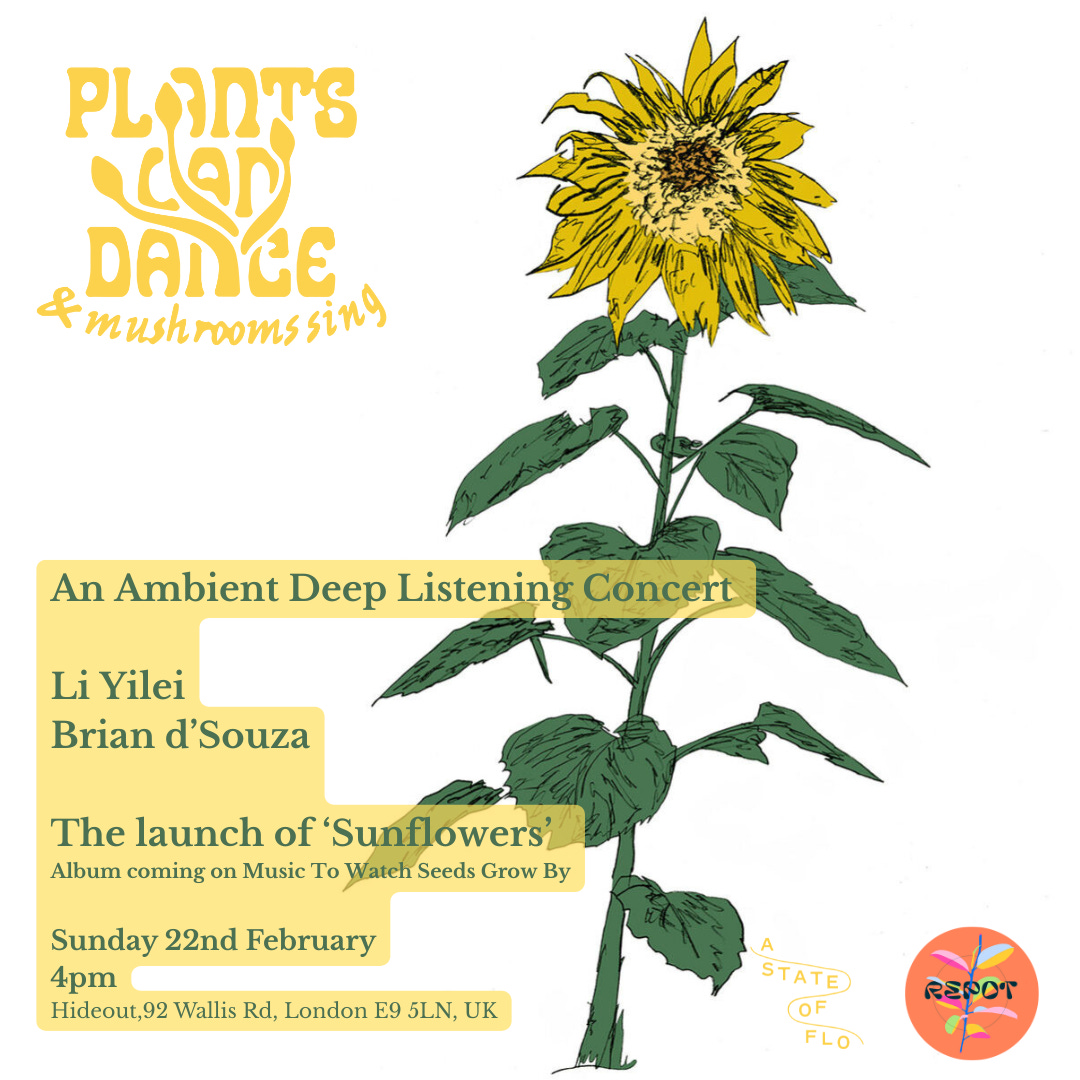
Please join us on the 22nd for the launch party!
We’ve invited the incredible Chinese sound artist and ambient musician Li Yilei to perform, and I’ll be doing a live rendition of the sunflower album (if I can get hold of a sunflower at this time of year!).
We’ll have some cassettes of the album and seeds to sell too - so you can try making your own album in this way too!
Early Bird tickets are still available here
Brian d’Souza - Sunflowers will be released 17th Feb on Music To Watch Seeds Grow By
Can i see your modules on your Synth???
Cheers