


Plants Can Dance compilation is out now! I’m delighted with the finished product - thanks to everyone who has listening, purchased or supported it so far. And thanks to everyone who came to our launch party last weekend, videos and report coming soon.
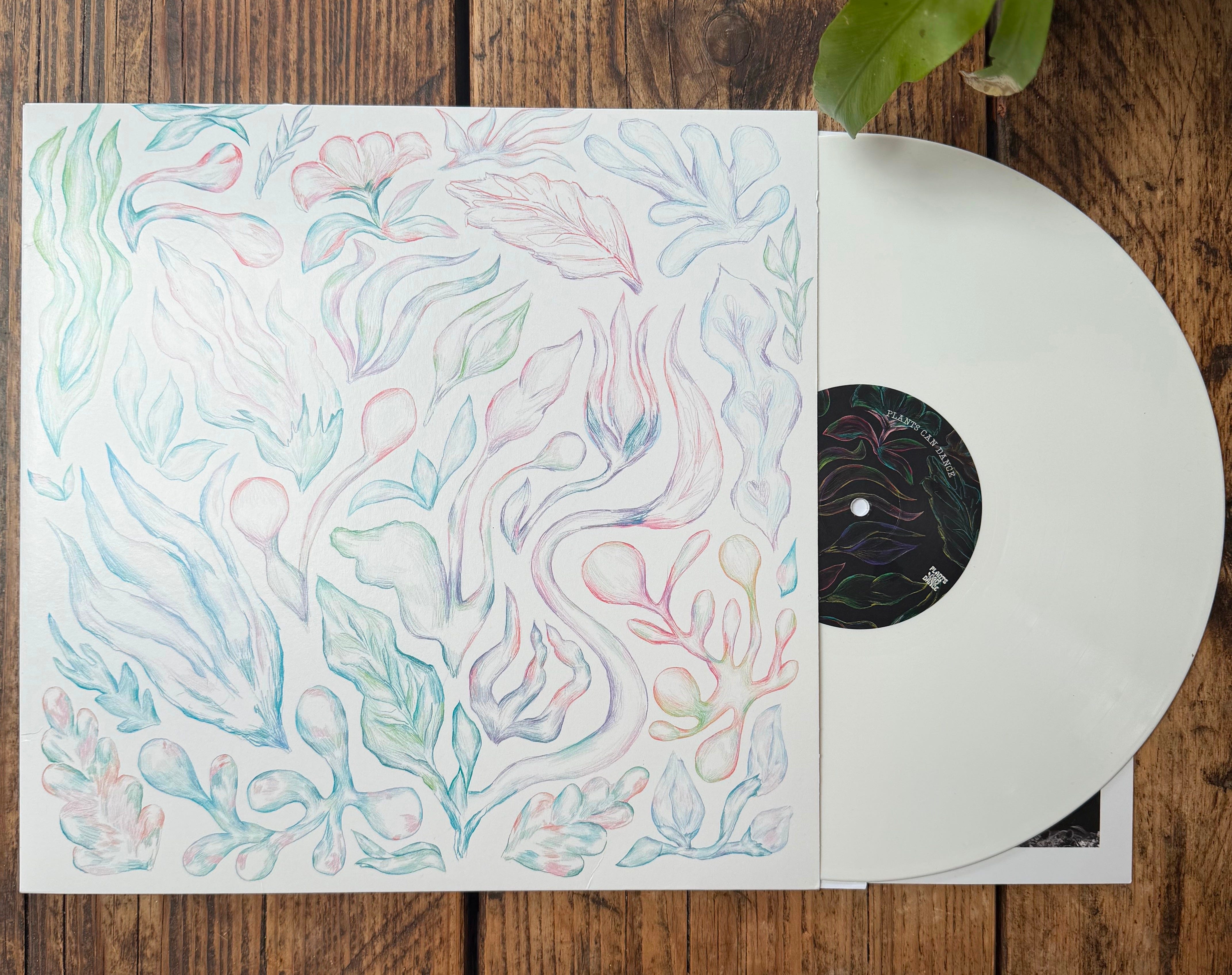
Please help support the project by purchasing from Bandcamp -
Or, if Bandcamp’s not your thing - click here for a selection of links to streaming platforms and record stores.
10% of all proceeds go to EarthPercent, and the rest goes to helping the artists featured on the compilation further their explorations into what Helen Anahita Wilson calls ‘bio-phillic music’: music inspired by and made in collaboration with plants and other living organisms and eco-systems.
Interview with Justin Wiggan
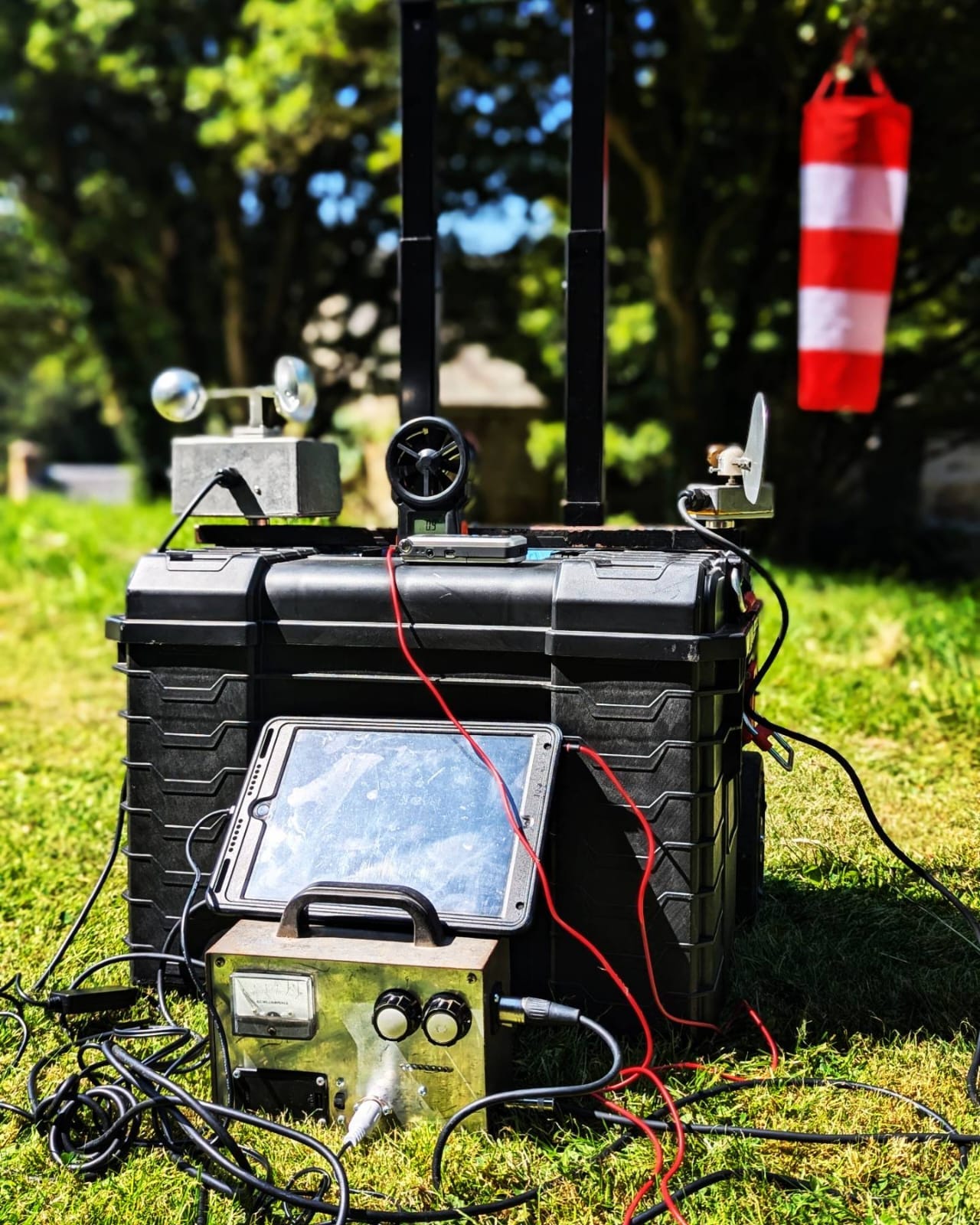
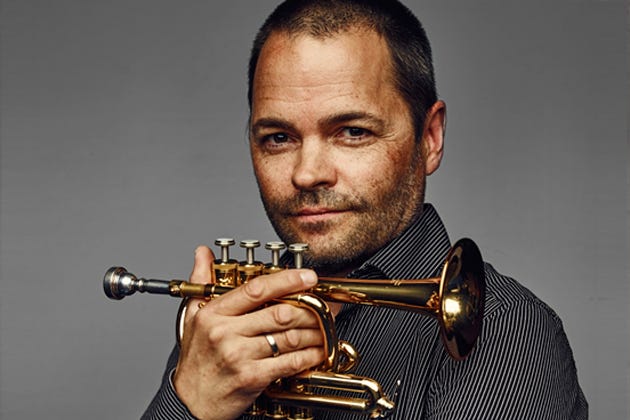
Justin Wiggan is a sound artist based in Cornwall. His track ‘A Spectral Wind’ is one of the compilation highlights, fusing a soundscape he created with his custom-built ‘Windjammer’ device and a collaboration with celebrated Norwegian Jazz musician Arve Henriksen.
It is quite a coup to have Arve on this compilation. I’ve been a big fan of his since my teenage years when his music was introduced to me by my father. Something about the glacial minimalism and contemporary Scandi-jazz production intrigued me, and his signature sound is evident in ‘A Spectral Wind’.
During the interview Justin and I talk about many things related to his practise, with the twin drivers of maintaining a child-like curiosity and being mindful of budget at the core of his work. These factors have led to Justin having to think very far outside the box when it comes to the music he makes. He is a true experimentalist: building devices from scratch, allowing him to work with various types of elemental data - from sea waves to lunar rays, wind, ice and fire.
He describes this is using a phrase that he’s lived with since childhood: “Even a carrot can become a torch.”
WATCH THE FULL INTERVIEW:
Transcript below:
Brian d’Sousa:
Justin, could you introduce yourself and tell us a little about your background and what you do?
Justin Wiggan:
My name is Justin Wiggan, and I have a real passion for sound and the therapeutic qualities it can have.
From the age of five, I’ve been captivated by music and the way it can evoke emotions and create experiences. My journey into the world of sound design began when I was given a small portable tape recorder, which I used to capture everyday sounds.
I became fascinated by the idea of creating immersive sonic landscapes, and that curiosity led me to explore different sound editing techniques.
Brian:
How did that interest develop into your career?
Justin:
During my time at university, I studied sound engineering and began working on experimental projects, collaborating with musicians and artists from a range of different disciplines.
My early career focused on music production and audio post-production for film and television. That gave me the opportunity to develop skills in sound mixing, mastering and soundscape design.
I also worked on immersive theatre projects, where I was able to experiment with spatial audio and interactive sound installations.
Brian:
Was there a particular project that stands out for you?
Justin:
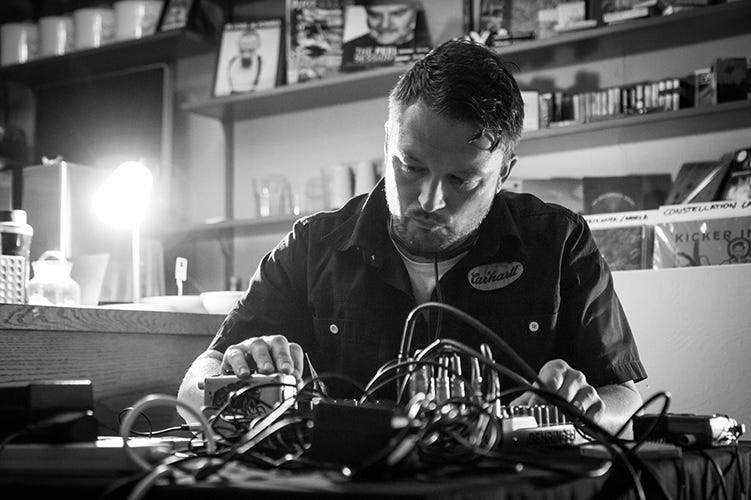
One of the most rewarding projects I worked on was a collaboration with a renowned sound artist to create an interactive sound installation exploring the relationship between sound and nature.
We combined field recordings, synthesised sounds and bioacoustic data to create an evocative soundscape that responded to the audience’s presence. It was a wonderful opportunity to explore how sound can create meaningful connections between people and the natural world.
Brian:
Your work often explores the therapeutic potential of sound. Can you tell us more about that?
Justin:
I’m passionate about the therapeutic potential of sound and its ability to promote wellbeing.
I’ve been involved in research projects exploring the use of sound therapy for stress reduction, pain management and improving sleep. My goal is to create sound experiences that not only entertain but also heal, inspire and encourage people to connect more deeply with themselves and their surroundings.
Brian:
Music has clearly been a constant throughout your life. How did your journey into experimental sound begin?
Justin:
I started out as the singer in a band in the 1990s. We were an indie band, we got signed, had a record deal and did some exciting things. What that really gave me was time in the recording studio, and I began to realise that the studio itself could be an instrument.
Before that I’d been in punk bands as a kid, recording on cassette tapes and MiniDiscs—whatever I could get my hands on. But being in a professional studio allowed me to experiment with sound in a completely different way. It sparked a curiosity that has stayed with me ever since.
After leaving that band, I joined a project with Darren Joyce, who was part of Modified Toy Orchestra with Brian Duffy. They were doing fascinating things with circuit bending and recycled electronics, and together we started exploring music from a much more environmental perspective.
That project was called Dreams of Buildings, and we made an album with Arve Henriksen, so it was really nice to reconnect with him again on Spectral Wind. Every project became an opportunity to experiment. Rather than trying to make one project fit every style, I’d create different projects for different ideas and different genres I wanted to explore.
Brian:
I remember when we first connected, although I can’t remember exactly how, you sent me links to dozens of different projects. What struck me was not just how prolific you are, but how each project had its own identity and its own conceptual framework.
One thing that really differentiates you from many artists—including myself—is that we tend to work with tools built by software and hardware manufacturers. You build your own instruments.
Could you tell us about some of the technologies you’ve created and where that approach comes from?
Justin:
It really comes from not having equipment as a kid.
Sometimes I didn’t even have batteries. If my parents couldn’t buy them, I’d have to find another way of making things work. I discovered, for example, that if I plugged headphones into the microphone socket, I could actually sing into the headphones and use them as a microphone.
I also experimented with an old VHS recorder. It had little buttons that allowed you to overdub audio, so I’d record static onto videotapes and layer my voice over the top. It was all about working with whatever was available.
There’s a phrase that’s stayed with me since I was young: “Even a carrot can become a torch.” It’s become a bit of a mantra. If there’s a creative problem, there has to be a creative solution.
So if I think, “I want to listen to sunlight,” the next question is, “How do we do that?”
That’s how many of these instruments begin.
I worked with an engineer called Dominic Allen to build a device called the Sun Singer, which converts sunlight into MIDI signals. By changing the lens, you can control the musical output using light itself.
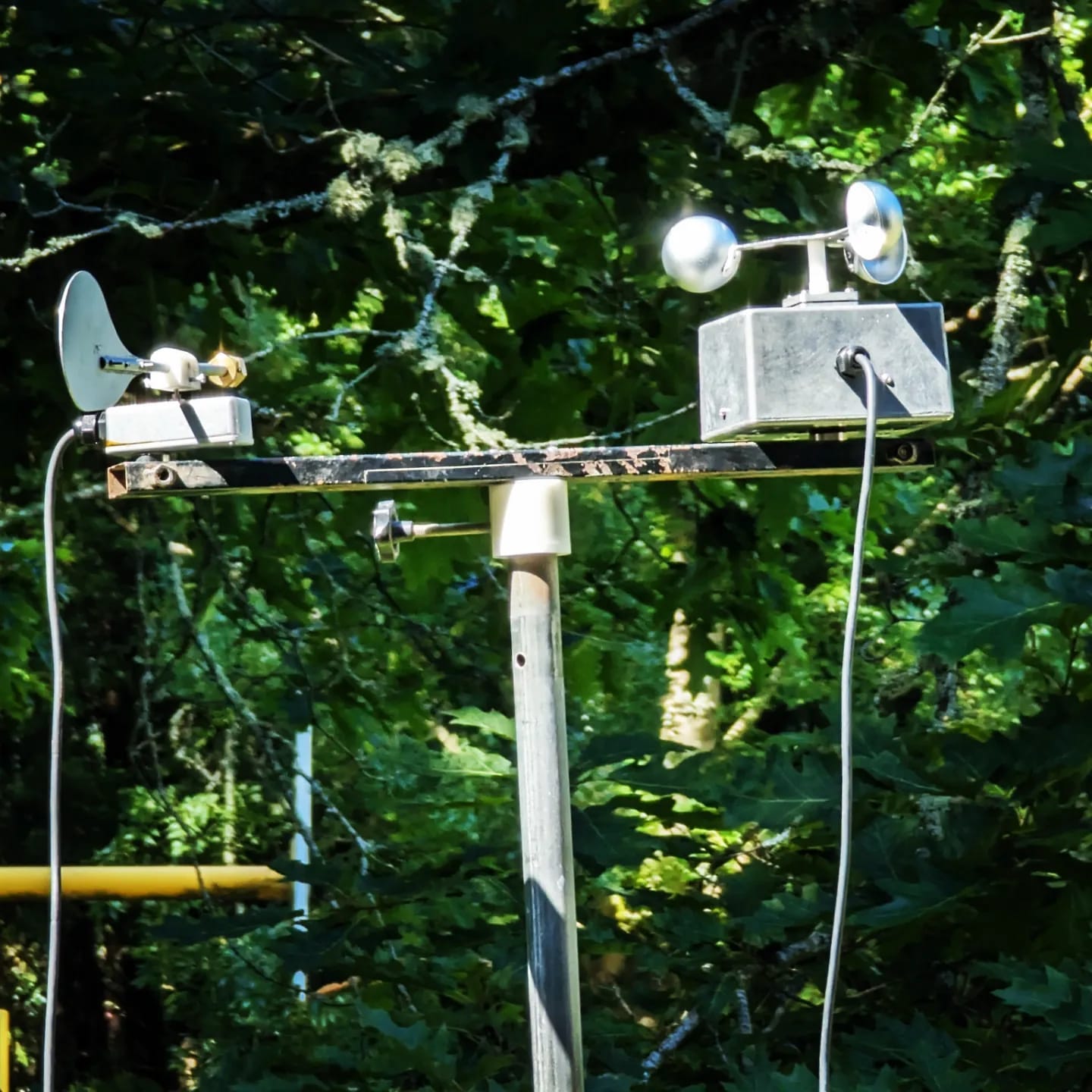
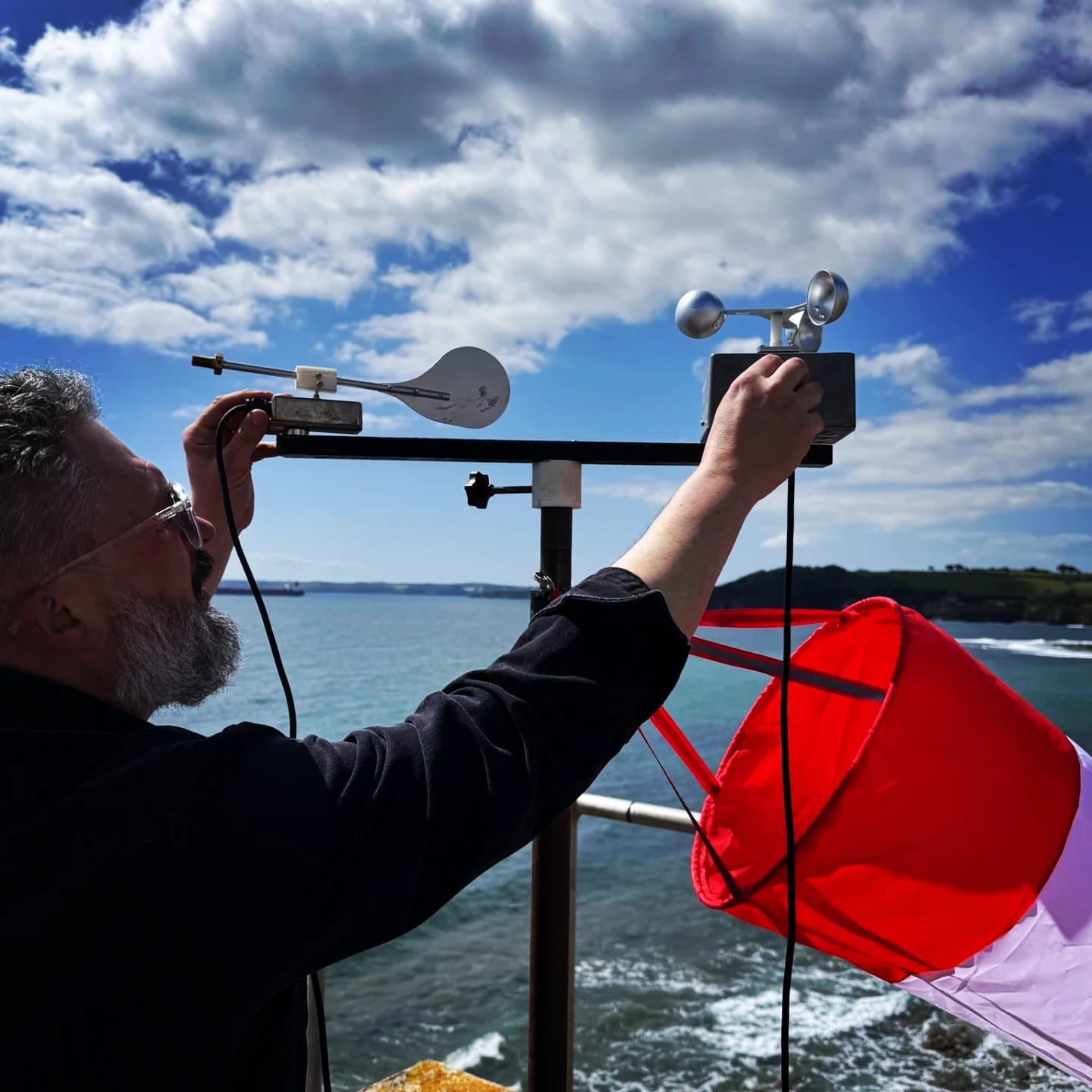
Then we built the Wind Jammer, which is probably my favourite because it’s visually beautiful as well as functional. It responds to wind speed, wind direction and light, translating those changing environmental conditions into shifts in pitch and tonality.
From there it just keeps evolving. We built instruments for water that translate movement into sound. We added sensors to measure environmental conditions, asking questions like, “What happens when the water contains more carbon?” Every project begins with curiosity.
At one point I thought, “I want to listen to the moon.”
So we created a pair of glasses that detect the luminosity of the Moon and the stars. By making tiny movements with my head, I can isolate individual points of light and effectively play them as an instrument. You’re not hearing the darkness of space—you’re hearing the changing light from celestial bodies translated into sound.
Really, it’s all driven by curiosity... and by not having much money. It’s amazing how those two things together can generate creativity.
Brian:
They’re extraordinary instruments. For anyone reading this who wants to explore them further, is there one place where all of these projects are collected?
Justin:
Unfortunately not—they’re scattered everywhere.
Organisation has never been my strongest point. As a child I was simply labelled as naughty, but what I understand now is that I have ADHD and I’m also on the autism spectrum.
Back then those things weren’t recognised. You were just told you were difficult or disruptive rather than being given support or encouraged to think differently.
I think that’s shaped my practice in a lot of ways.
I remember recently recording the planetary alignment using what I call the Moon Tune. I was in St Agnes, Cornwall—one of the darkest places in the UK—with the lunar sensors on while astronomers had their telescopes set up around me.
I was moving my head gently, playing the stars and planets as sounds while scientists explained what we were observing. There wasn’t really an audience—just a handful of people standing together in a field.
I remember thinking, “How did I get here?”
There’s still part of me that struggles to believe I deserve to be doing this.
As artists we’re often conditioned to think what we create isn’t really valuable, particularly when it doesn’t fit neatly into mainstream society. Growing up neurodivergent added another layer to that feeling.
I absolutely love what I do, but there’s still this sense of guilt sometimes—standing in a field listening to the stars while a muntjac deer is calling nearby and scientists are getting excited over what they’re seeing through their telescopes. It can feel surreal.
Brian:
I completely understand that. I think many artists experience something similar. You ask yourself what right you have to spend your time making art when the world feels so uncertain and there are people doing work that seems much more directly useful.
But I’d like to think there is real value in what we do, especially when it becomes collaborative—as this project is.
One thing that strikes me about your work is that so much of it involves translating natural phenomena into sound. Whether it’s moonlight, wind, water or environmental data, you’re creating a form of musical biolocation or biodata sonification.
What are the main drivers for you when it comes to your art?
Justin:
Everything I do is rooted in experiences from childhood—things I’ve had to acknowledge rather than hide from.
One of the biggest influences was that I was completely obsessed with becoming an astronaut. That’s all I ever talked about.
I remember going to the bank with my mum when I was a child. Back then you had to go in and speak to the bank manager. After he’d finished talking with my mum, he asked me, “So, what do you want to be when you grow up?”
I said, “I’m going to be an astronaut.”
He leaned over the desk towards me—I remember feeling incredibly small—and said, “Don’t be so stupid. You’ll never be an astronaut.”
At the time I’d already heard people say things like, “Someone from Burnley will never become an astronaut,” so it wasn’t completely new. Looking back, I almost respected the fact that he didn’t just tell me what I wanted to hear.
But I think that’s one of the reasons I do what I do today. If I couldn’t become an astronaut and explore space physically, I could become one sonically.
Nature is incredibly rich in data—light, wind, movement, electrical currents—and I’m fascinated by how all these different systems interact. Exploring those relationships makes me feel like I’m somewhere between a sonic detective and what I like to call an “Earthnaut.”
Brian:
I love that—an Earthnaut. It’s a brilliant description.
It’s amazing how many of us carry these childhood moments with us. Often it’s the comments people make—sometimes without even thinking—that stay with you for life.
I remember one of my teachers telling the class that none of us should pursue art. Those kinds of off-the-cuff remarks can have a huge impact when you’re young.
Justin:
Exactly.
I remember one of my own art teachers saying to me, “What do you say to someone with an art degree?”
I didn’t know.
He said, “Big Mac and fries, please.”
Those attitudes towards creativity stay with you. They suggest that artists don’t really contribute anything of value—that creativity somehow sits outside society rather than enriching it.
You still encounter that attitude today. Artists have to develop a thick skin because they’re constantly defending the value of curiosity.
For me, curiosity should almost be considered a human right. People should be encouraged to explore, not discouraged from asking questions.
The moment you suppress curiosity, you also create control.
Brian:
Absolutely.
Let’s talk about the track you’ve contributed to the compilation. When I saw Arve Henriksen’s name appear alongside yours, I was genuinely excited. My dad was a huge fan of his work, so I grew up listening to his music. To see you collaborating together felt really special.
How did that collaboration come about?
Justin:
It actually goes back to my time with Dreams of Buildings. We released an album called Drawing the Heart Sounds on a label that eventually became Burning Shed.
I’d always admired Arve Henriksen’s work and hoped we’d have another opportunity to collaborate.
Around that time I was working on a series called Sky Identities. The first release was Cloud Scanner, where I recorded data from clouds and invited musicians to perform alongside those recordings.
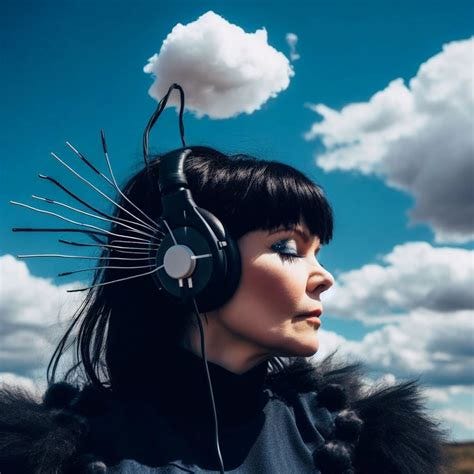
The follow-up project continued exploring atmospheric and sky-based data. I’d already recorded enough material for almost two albums when I sent Arve some of the wind recordings I’d been working with.
To my surprise, he sent back a recording he’d improvised over one of the pieces.
I was so excited when I heard it. His playing complemented the wind data perfectly. It felt like a conversation between the technology, the wind and a human performer.
His contribution brought the whole piece together. Hopefully we’ll have the chance to record more together in the future.
Brian:
So your role was creating the sonic landscape from the environmental data. How do you actually approach composing with those systems?
Justin:
Sonification is unpredictable.
Sometimes you get extraordinary results, and sometimes the results are completely chaotic.
One thing I discovered is that recording during a storm isn’t a good idea! The amount of information coming from the wind direction and wind speed simply overwhelms the system.
A gentle coastal breeze works much better.
I’ll usually capture the data as MIDI, let it run for twenty minutes or so, sometimes repeating the process several times, and then gradually begin shaping it.
Sometimes I’ll choose instruments as I’m recording; other times I’ll assign them later in the studio.
I’m also interested in the psychology and cultural history of wind—how humans have related to the sky throughout history.
I’m currently discussing a documentary for BBC Radio 3 that explores people who spend much of their lives in the sky, using recordings generated by wind as part of the soundtrack.
Even though these pieces are data-driven, there’s still a traditional compositional process involved. I’m listening for harmony, balance and what’s musically interesting.
The important thing is not to manipulate the data too much. Once the system is set up, I prefer to let nature express itself.
Brian:
That’s very much my own approach as well. Once you’ve built the system, it’s about stepping back and allowing the natural source to determine how the music unfolds.
Have you spoken to Arve about the wider field of biosonification or projects like Plants Can Dance?
Justin:
Not really.
He’s incredibly busy and seems to be involved in several projects at any one time. He’s constantly exploring new ideas.
I know he’s interested in working more with the wind, but I couldn’t really speak for his thoughts on sonification as a whole.
Brian:
Perhaps we’ll discover those in another conversation.
Justin, this has been a wonderful introduction to your work. I’ve always admired your curiosity and your willingness to keep experimenting. I think we could all benefit from more of that.
And the piece you’ve contributed to Plants Can Dance is absolutely beautiful. Arve’s playing is the icing on the cake, but even without it the composition stands on its own. It’s a real honour to include it on the compilation.
Finally, where can people find out more about your work?
Justin:
At the moment I’d probably point people towards my Glassed Twin Instagram account or Internal Garden website
I know I need to bring everything together in one place, but right now my projects are scattered across lots of different platforms.
Brian:
That’s a great place to start. Justin, thank you so much for taking the time to speak with me.
Justin:
Thank you, Brian.