



I was recently in Goa, India, for my second Sultry Mist Festival. I love it there, not only does it allow me to visit a place that I have close family connections to (my auntie, the OG 'Auntie Flo aka Florinda Dantas, lived near where the festival takes place), but the programming, people, venues all make it one of the most unique festival experiences I’ve ever had.
Perhaps this is because it’s run and curated by artists, not primarily musicians, on a shoe string budget and is essentially a 'family affair’ for only 300 people, it feels different and special. Every act is unique in their own way, and every slot on the schedule varies wildly: one minute you have a crazy cabaret show, the next a punk band, the next an electronic act DJing with a PlayStation controller, the next a more traditional Indian classical raga concert, the next New York-based Disco (courtesy of Tom Of England) playing with his daughter with stunning stage design and light show.
They claim it is a ‘festival for all the senses’ and it is certainly that. My own role this year was to provide a biosonification soundtrack to their Sunday lunch, under the name of ‘Food Can Dance’.
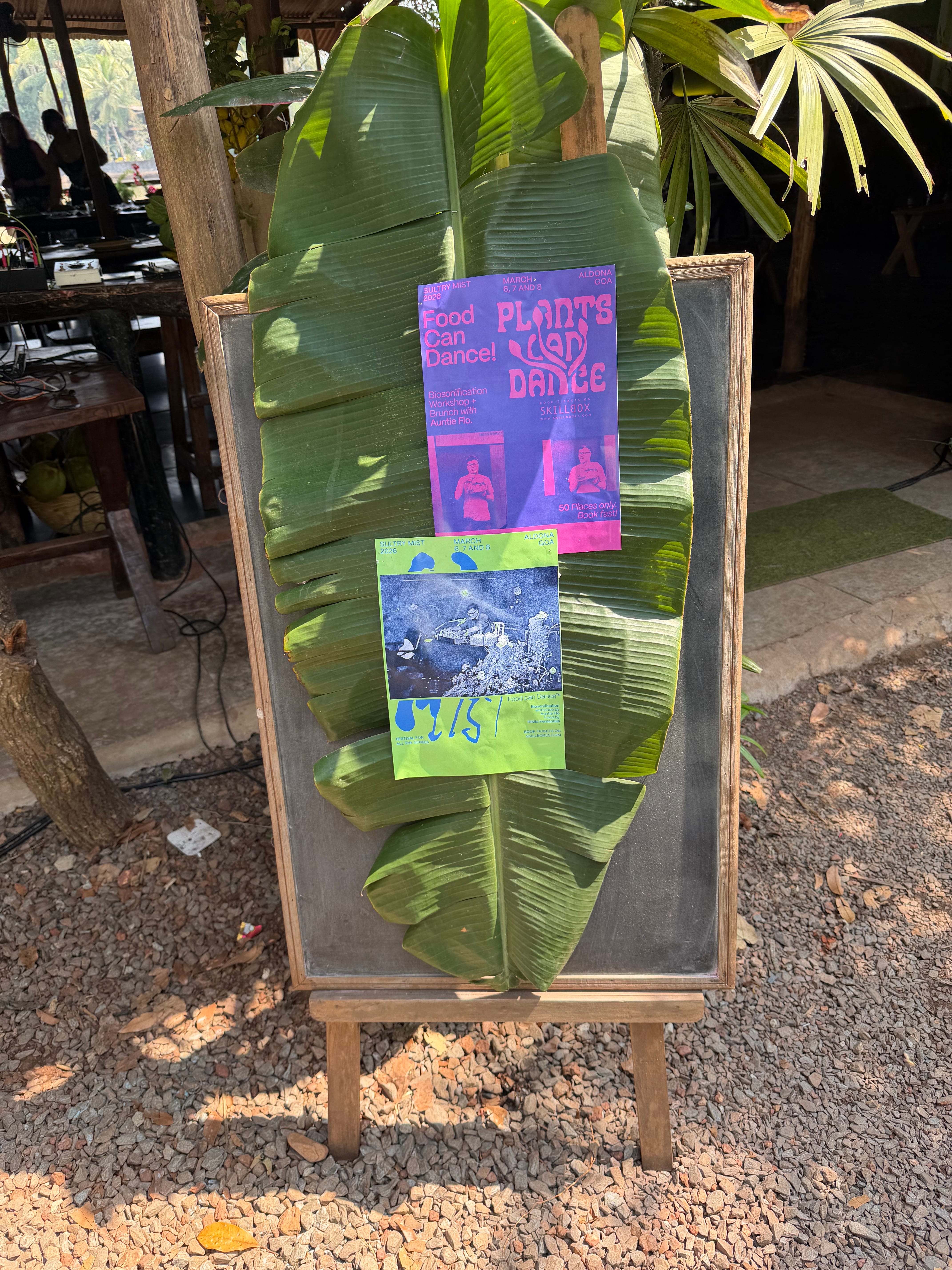
The highlight of the festival was undoubtedly being introduced to the music of DJ Khabir, coming out of West Bengal (and as I subsequently discovered sitting adjacent to its burgeoning ‘Dek Bass’ scene). I was entirely unfamiliar with his work, and by way of introduction the festival showed a short film that was made by Rana Ghose, an old contact of mine. Rana and I had connected over ten years ago as he helped facilitate bringing Charanjit Singh over to Europe, where we hosted him at two parties in London and Glasgow.
Rana’s film, ‘Bass Boss’, introduces us to the unique sonic experimentations of Khobir, in which his mission is to make bass music with such destructive power that it actually hurts you. And by bass music, I mean music that only contains bass. It may have a smattering of raw percussive elements from time to time, the odd siren and vocal ‘DJ Khabir’ sample, but 99% of it is literally bass. And by ‘bass’, I mean BASS.
His set blew me away. Set up incredibly well by the film, which showed Khabir’s attempts to increase the intensity of the bass sound he could produce. He does this by working with local electricians to build soundsystems (see the picture above) with humungous bass bins and playback devices in which everything is rooted towards producing an overwhelming, destructive bass sound.
It was the purest distillation of the ‘hardcore continuum’ that I’d heard, no fucking around, just straight low end, relentless in its ability to punish you from start to finish. But, it was created with no knowledge of this Western musical canon - similar to Charanjit Singh ‘inventing’ acid house, this music was borne out of a local culture in isolation, without western influence.
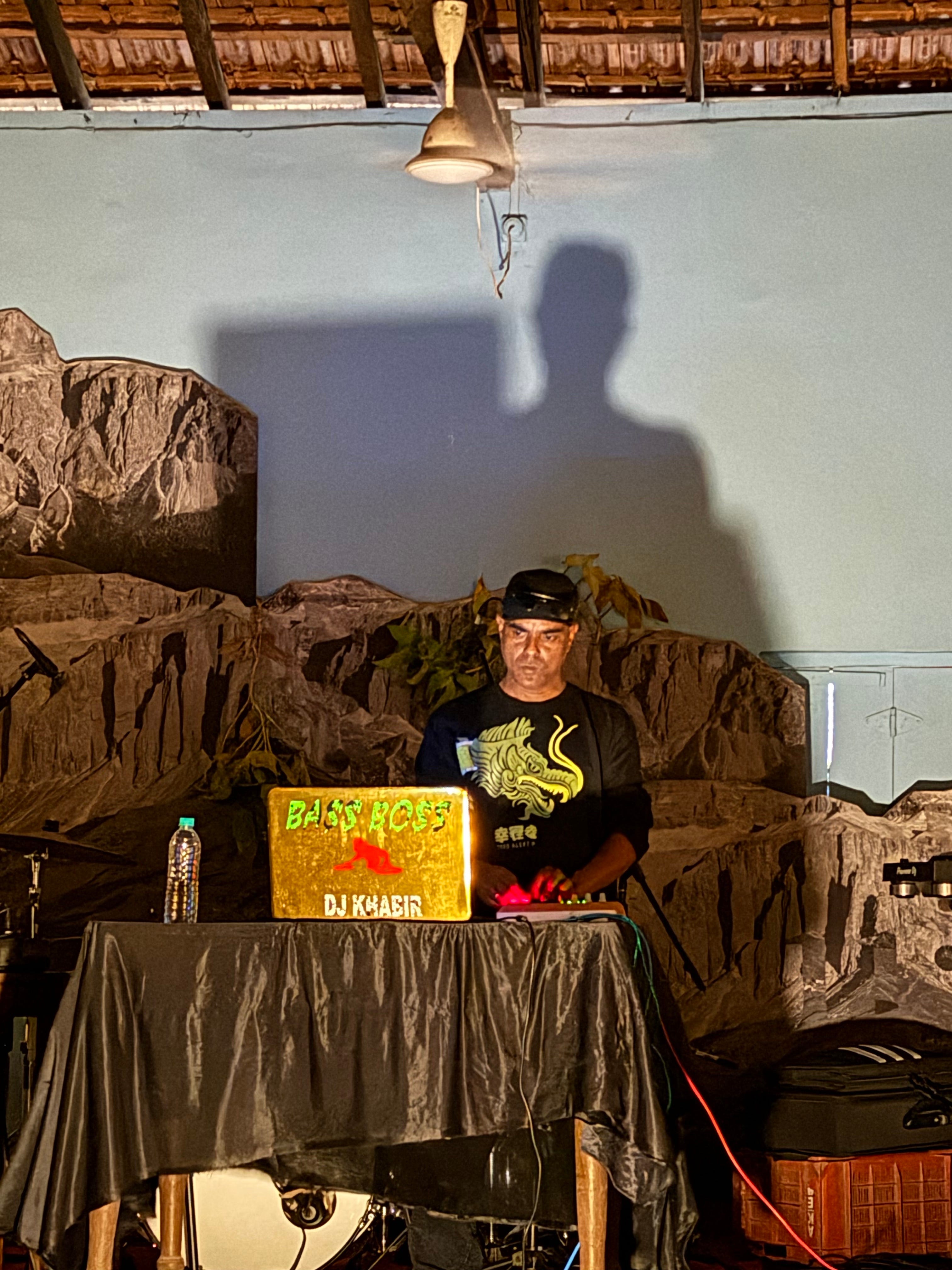
Aided by Khabir’s menacingly serious demeanour on stage and having heard repeatedly on the film his intention to actually hurt anyone listening, and then witnessing kids literally passing out and being carried away from the dancefloor in the film, this was one of the most extreme musical experiences I’ve ever come across.
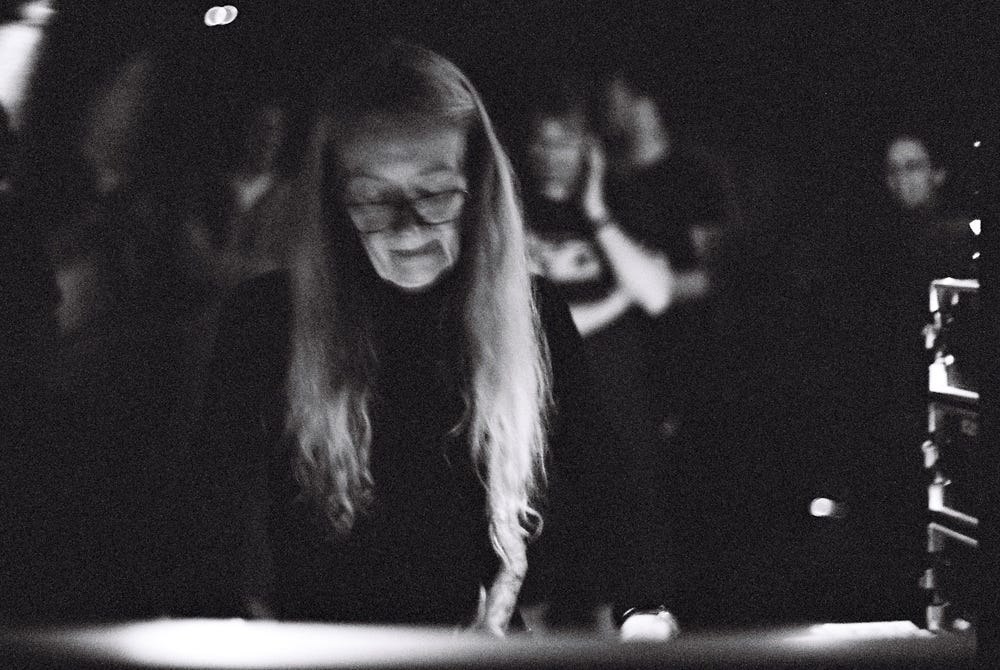
I’d place it up there with the late Maryanne Amarcher’s ‘third ear’ octagonal sound rooms, which I heard 20 odd years ago - not so much due to the bass, but the sheer loudness and intensity of that sound experience has stayed with me all this time.
Entering the dancefloor, you were hit with this wall of sound. Luckily I’d brought ear protection, as otherwise it would have been too much for my ear drums, but with protection on, what you heard was through the body. Relentless bass frequencies, trapping you within huge sine waves and primitive low frequency oscillations. After around ten minutes I started to discombobulate, after 15 I was slightly queasy, after 20 I had to leave the room and take a break only to be enticed back for more. There was practically no let up - the bass didn’t stop, there were no drops, breaks, build ups - just pure bass.
With caution, I’d encourage the more musical adventurous to seek out DJ Khabir and certainly the Bass Boss film, if you see it at a film festival or if it ever gets a general release.
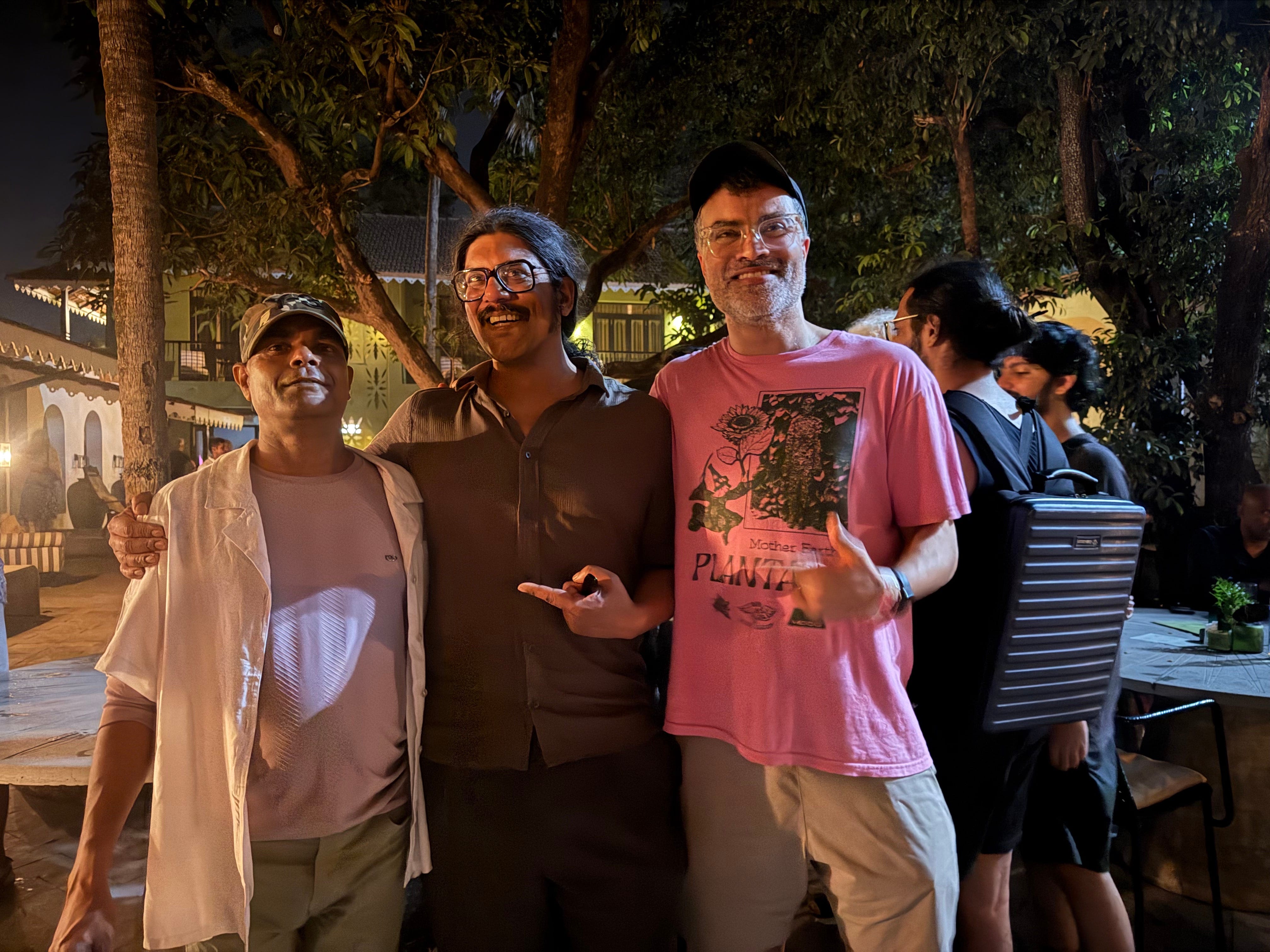
Pic: Khabir, Rana and myself at the after party.
The following is taken from an interview with Rana, published on Resident Advisor last year:
"DJ Khabir extended the drop to an absurd conclusion," Ghose said. "He wasn't aware of any parallels with car stereo or bass subcultures abroad–it was entirely his own invention." Ghose compares Khabir’s performances to "using a divining rod to locate the breaking point of the human psyche through low-end frequencies."
Reflecting on the social and historical resonance of the Dek Bass movement, he added: "I don't think the state of West Bengal ever truly recovered psychologically from the devastation of the 1943 famine that Churchill oversaw, or the chronic economic malaise and unspoken trauma the region seems to present. In my experience, bass frequencies at that scale become a narcotic that forces you to exist in that exact moment alone. That past simply cannot exist. And maybe that's the point."
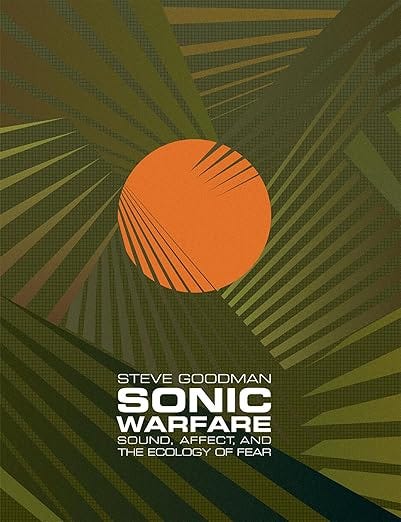
All this reminded me to re-visit the book ‘Sonic Warfare’ by Steve Goodman aka Kode9 (academic and founder of Hyperdub records). Its described as
‘An exploration of the production, transmission, and mutation of affective tonality—when sound helps produce a bad vibe.’
He draws parallels from the use of sound within warfare to the various bass soundsystem cultures across the globe, to urban destinations in which ‘sound contributes to an immersive atmosphere or ambience of fear and dread’. When politicised, sound can be a weapon - used for crowd control, torture and within warfare itself.
He details how infrasound, or sub-20 Hz bass frequencies that are inaudible to the human ear, are capable of inducing bodily harm. Goodman talks about the vibratory “envelope of death,” where they “allegedly suffered sustained internal spasms as their organs hit critical resonance frequencies.” Ouch!
Infrasound devices generally require huge, heavy rigs to produce such powerful waves, which limit their practicality - and I’m not sure if DJ Khabir and other soundsystem architects from West Bengal to Jamaica have got there yet, but they intuitively understand the power they are playing with… which makes this music all the more dangerous, and exciting.
Tread with caution…
You ever experienced Dillinja and Lemon D’s Valve Sound System?
great piece took me straight back to Phill Niblock at the Arches in Glasgow, early 2000s, and Jah Shaka’s sound system in London, bass bins at each corner you couldn’t hear it just felt it. that thing where it stops being music